
Dooars Temperature in October: Weather & Rainfall
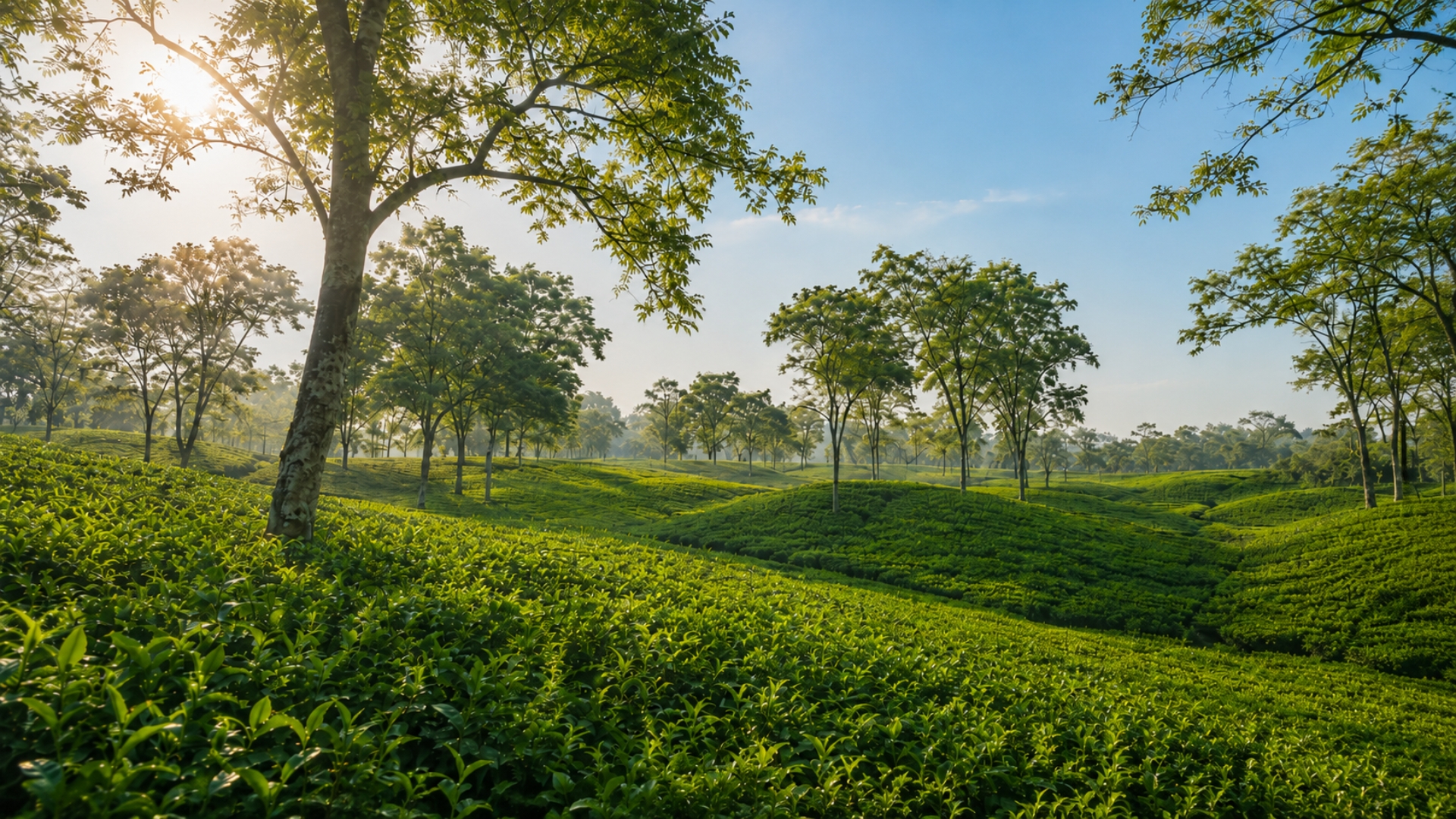
October is the post-monsoon period in Dooars, West Bengal, when rainfall begins reducing but the tea gardens, forests and rivers still carry much of the greenery left by the monsoon. Based on India Meteorological Department climatological data for Jalpaiguri, the average daily maximum temperature in October is around 31.5°C, while the average daily minimum is around 21.8°C. The month records approximately 154.1 mm of rainfall across about 5.4 rainy days.
For travellers, this means warm afternoons, more comfortable mornings and evenings, and some possibility of rain, particularly during the earlier part of the month. October also marks the beginning of an important outdoor travel period in Dooars. Tea-estate visits, sightseeing and wildlife-related trips become easier to plan as the main monsoon period ends, although weather and forest conditions should still be checked close to your travel dates.
The month is particularly useful if you want to see tea gardens, forests, rivers and the lower Himalayan foothills during the same trip. Places such as Gorumara National Park, Chapramari Wildlife Sanctuary, Murti, Samsing, Jhalong and Bindu can form part of an October itinerary depending on the number of days available.
Dooars Weather in October at a Glance
| October Weather Information | |
| Average Maximum Temperature | 31.5°C |
| Average Minimum Temperature | 21.8°C |
| Average Monthly Rainfall | 154.1 mm |
| Average Rainy Days | 5.4 days |
| Season | Post-monsoon / Autumn |
| Daytime | Generally warm |
| Morning and Evening | Comparatively comfortable |
| Rain Protection | Umbrella or light rain jacket recommended |
Weather figures are based on IMD climatological data for Jalpaiguri, 1991–2020. Actual temperature and rainfall can vary according to the year, location and short-term weather conditions.
Dooars Weather in October
The weather in Dooars changes noticeably as September ends and October begins. The southwest monsoon starts withdrawing, but moisture, cloud cover and occasional showers can remain. The result is a month that sits between the heavy monsoon period and the cooler, drier conditions that become more noticeable during November and winter.
(a) Temperature in Dooars in October
Historical climate data for Jalpaiguri shows an October average daily maximum of around 31.5°C and an average minimum of around 21.8°C. Daytime weather can therefore still feel warm, particularly around noon and early afternoon. Mornings and evenings are usually more comfortable, with conditions gradually becoming cooler as the month progresses.
You do not need to pack for proper winter during most of October. Comfortable cotton or breathable clothes are useful during the day, while one light jacket, shrug or extra layer is usually enough for mornings, evenings or cooler weather later in the month. You can also check the broader October weather in Jalpaiguri before finalising your travel dates.
(b) Rainfall in Dooars in October
Rain does not suddenly stop on 1 October. According to the historical Jalpaiguri data used for this article, October receives around 154.1 mm of rainfall across approximately 5.4 rainy days. That is considerably different from saying that October is completely dry. Short showers, cloudy periods and changing weather are still possible, especially during the earlier weeks.
At the same time, rainfall generally reduces from the main monsoon levels of the previous months. Roads and outdoor travel therefore become more practical as the month develops. A compact umbrella or light rain jacket remains useful because even one shower can affect a sightseeing or plantation schedule.
(c) Morning, Afternoon and Evening Conditions
A typical October day in the region can feel different across different hours. Mornings are generally comfortable for tea-estate walks, outdoor photography and starting longer road trips. Afternoons can become warm and slightly humid, particularly when the sky is clear, while evenings are usually easier for spending time outdoors. Rain or cloud cover can change these conditions quickly, so fixed temperature figures should be treated as regional averages rather than a daily forecast.
Is October a Good Time to Visit Dooars?
October can be a very practical month for a Dooars trip if you want post-monsoon greenery without travelling during the peak rainy period. Tea estates remain green, forests carry dense vegetation and rivers often retain stronger water levels after the monsoon. At the same time, improving weather makes road travel, outdoor sightseeing and plantation activities easier to organise than during the wettest months.
October also works well because Dooars is not based around one type of attraction. You can divide a trip between tea gardens, forests, rivers and the open landscape of the Himalayan foothills. This allows you to keep one day for a tea estate, another for a wildlife or forest area and another for rivers or foothill sightseeing rather than repeating the same type of activity every day.
It would still be inaccurate to call October the single best month for every traveller. Someone looking for colder weather may prefer December or January, while someone who specifically wants very dry conditions may prefer later in the season. October is useful because it provides a balance between green post-monsoon scenery and improving conditions for outdoor travel.
October Compared With Other Months in Dooars
| Period | General Condition | Main Difference |
| July–September | Monsoon | Higher rainfall and more travel disruption |
| October | Post-monsoon | Green landscapes with improving outdoor conditions |
| November | Late autumn | Cooler and generally drier |
| December–January | Winter | Cooler mornings and evenings |
| February–March | Late winter to early warm season | Drier conditions with gradually rising temperatures |
Places to Visit in Dooars in October
Your October itinerary should depend on where you are staying and how much road travel you want each day. Dooars covers a large area, so trying to include every well-known place in one short trip usually results in more driving and less time at each location. Travellers staying in the western and central parts of Dooars can consider the following places according to route, forest access and available days.
(i) Gorumara National Park
Gorumara National Park is one of the main wildlife areas in Jalpaiguri district. The wider forest landscape is associated with the Indian one-horned rhinoceros, Asian elephant, gaur and several bird species. October comes after the main annual monsoon forest-closure period, making wildlife tourism relevant again, but safari timings, zones, permits and operating conditions should always be confirmed for your actual travel date.
(ii) Chapramari Wildlife Sanctuary
Chapramari Wildlife Sanctuary lies within the broader forest region around Gorumara and Murti. It adds another protected forest landscape to an October itinerary and is associated with elephants, gaur and birdlife. Travellers should treat wildlife sightings as natural possibilities rather than guarantees, and all forest visits remain subject to official access conditions.
(iii) Murti
Murti provides a river landscape that contrasts with both tea estates and forest interiors. Post-monsoon water levels and surrounding greenery can make October visually interesting, although local conditions should always be checked after periods of rainfall. Murti can often be combined with other nearby forest and sightseeing routes depending on where you are staying.
(iv) Samsing
Samsing is useful for travellers who want to see the transition from the flatter Dooars landscape towards forested foothills. Tea-growing areas, wooded slopes and rising terrain give the region a different character from places closer to Malbazar or Lataguri. It works better as part of a planned sightseeing day rather than a hurried stop between distant attractions.
(v) Jhalong
Jhalong lies in the western Dooars sightseeing circuit and is associated with the Jaldhaka River and foothill scenery. Travellers planning Jhalong should consider road time, weather and daylight because it is better experienced as part of a properly planned route than as an additional stop at the end of an already long day.
(vi) Bindu
Bindu lies close to the India-Bhutan border area beside the Jaldhaka River. It is suitable for a longer western Dooars sightseeing day when road conditions and weather permit. Travellers staying farther away should consider the total driving time before adding both Bindu and several other destinations to the same itinerary.
Tea Gardens in Dooars During October
Tea gardens remain one of the clearest parts of the Dooars landscape in October. The post-monsoon greenery can make plantation roads, rows of tea bushes, shade trees and surrounding estate areas particularly striking. These are working agricultural landscapes, however, so visitor access, photography, tea walks and factory visits depend on individual estate rules and current operations.
There is also a difference between seeing a tea garden during sightseeing and spending time inside an active estate. An organised estate experience can help you understand cultivation, plucking, factory processing and the relationship between the plantation and the tea that finally reaches your cup. Tea production follows seasonal and operational schedules, so particular activities or factory operations should never be assumed to be available every day.
Jungle Safari in Dooars in October
Wildlife tourism becomes relevant again in the post-monsoon period after the main seasonal forest closure. Depending on your route, travellers may consider areas such as Gorumara National Park, Chapramari Wildlife Sanctuary and Jaldapara National Park. October can therefore work well for travellers who want to combine tea-estate time with one wildlife-focused outing.
Safari access should not be treated as guaranteed simply because you are travelling in October. Forest Department rules, permitted zones, vehicle availability, weather, road conditions and local closures can all affect operations. If safari is an important part of your trip, confirm the current arrangements before finalising the rest of your daily schedule.
Travelling to Dooars During Durga Puja
October often overlaps with Durga Puja, making it an important travel period for families and groups from West Bengal. The combination of school holidays, office leave and improving post-monsoon weather can increase demand for accommodation, vehicles and popular activities. Travellers planning around Puja dates should therefore avoid leaving accommodation and major transport arrangements until the last moment.
The holiday period can also make a longer Dooars trip practical. Instead of trying to cover tea gardens, forests and sightseeing within 2 days, you can distribute activities across 3 to 5 days. This reduces long daily drives and allows weather changes or safari schedules to be handled more easily.
What to Pack for Dooars in October
Packing for October does not require heavy winter clothing. Comfortable cotton or breathable clothes work well during the warmer part of the day, while one light jacket or extra layer is useful for mornings and evenings. Comfortable walking shoes are important if you plan plantation walks, forest-related outings or sightseeing around rivers and uneven ground.
- breathable daytime clothes
- 1 light jacket or extra layer
- comfortable walking shoes
- compact umbrella
- light rain jacket
- insect repellent
- sunscreen
- personal medicines
- binoculars for wildlife or birdwatching
An umbrella or lightweight rain jacket is still worth carrying because October can receive occasional showers. Sunscreen and insect repellent can also be useful for time spent outdoors, while binoculars are a practical addition if wildlife or birdwatching forms part of your itinerary.
Where to Stay in Dooars in October
Accommodation in Dooars ranges from conventional hotels to properties located close to forests and tea estates. If tea is one of the main reasons for your trip, staying within an active plantation can make the estate part of the holiday rather than a short sightseeing stop. Octavius Tea Resorts operates 2 heritage bungalow properties within working tea estates in Jalpaiguri district.
(a) Sylee Bungalow in Damdim
Sylee Bungalow is located inside Sylee Tea Estate in Damdim, Jalpaiguri district. The bungalow places guests directly within a working plantation environment, where tea sections, estate roads and surrounding greenery form part of the stay. Current room information, occupancy and tariffs should be checked on the dedicated property page.
(b) Nya Sylee Bungalow in Nagrakata
Nya Sylee Bungalow is located inside Nya Sylee Tea Estate at Nagrakata in Jalpaiguri district. Like Sylee, the property provides accommodation within an active tea-growing landscape rather than requiring travellers to drive elsewhere simply to experience a plantation.
Across the 2 properties, Octavius Tea Resorts has 7 private rooms with total accommodation for up to 20 guests. Selected stay arrangements include meals and tea-estate activities according to current package inclusions and estate operations. Travellers should refer to the latest package information for details about meals, tea garden tour and tea factory tour included with their booking.
How Many Days Are Enough for Dooars in October?
Around 3 to 5 days works well for many October trips because the region contains several different types of experiences spread across multiple locations. A short trip can focus on one tea-estate area and one forest or sightseeing day, while a longer itinerary gives you more room for wildlife, rivers and foothill routes without filling every day with long drives.
For a first visit, 3 days is often the most practical minimum if you want more than one type of experience. Arrival and departure can take a significant part of the first and final day, especially when travelling through New Jalpaiguri Railway Station or Bagdogra Airport. Keeping an additional night provides more flexibility if October rain, traffic or forest timings affect one of your planned activities.
Frequently Asked Questions About Dooars in October
Q1. What is the temperature in Dooars in October?
Based on IMD Jalpaiguri climatological data, October has an average daily maximum temperature of around 31.5°C and an average daily minimum of around 21.8°C. These are historical regional averages, so actual daily temperatures can be higher or lower depending on local weather.
Q2. Does it rain in Dooars in October?
Yes. October is post-monsoon rather than completely dry. Historical Jalpaiguri data shows around 154.1 mm of average October rainfall across approximately 5.4 rainy days. Carrying an umbrella or light rain jacket is therefore sensible.
Q3. Is October a good time to visit Dooars?
Yes, October can be a good time if you want green post-monsoon scenery together with improving conditions for sightseeing and outdoor travel. Tea gardens remain green, rainfall starts reducing and wildlife tourism becomes relevant again after the main seasonal forest closure.
Q4. Is Dooars cold in October?
October is generally not a cold month in the Dooars plains. Average daytime maximum temperatures remain around 31.5°C in the Jalpaiguri data, while nights and mornings are more comfortable at an average minimum of around 21.8°C. Proper winter conditions arrive later.
Q5. What clothes should I wear in Dooars in October?
Light and breathable clothes work well during the daytime. Carry 1 light jacket or extra layer for mornings and evenings, along with comfortable walking shoes. A compact umbrella or rain jacket is also useful because occasional October rain remains possible.
Q6. Are jungle safaris open in Dooars in October?
October falls after the main monsoon forest-closure period, so wildlife tourism generally becomes relevant again. Actual safari availability depends on the specific forest, Forest Department rules, zones, vehicles, weather and local operating conditions. Always confirm current access before travel.
Q7. Can you visit tea gardens in Dooars in October?
Yes, but tea estates are working private properties, so access should be authorised. Plantation walks, tea factory visits, photography and other activities depend on individual estate rules, weather and production schedules. Staying within a tea estate can make the plantation environment part of the full holiday.
Q8. Which places can you visit in Dooars in October?
Depending on your base and available days, an October trip can include Gorumara National Park, Chapramari Wildlife Sanctuary, Murti, Samsing, Jhalong and Bindu. Do not try to cover every location in a short trip because travel time between different parts of Dooars can make the itinerary unnecessarily rushed.
Q9. Is Dooars crowded during Durga Puja?
Popular properties and tourism areas can receive more demand during the Durga Puja holiday period. Accommodation, vehicles and selected activities are therefore better planned in advance if your travel dates fall around major Puja holidays.
Q10. How many days are enough for Dooars in October?
Around 3 to 5 days works for many travellers. A 3-day trip can combine tea-estate time with one major forest or sightseeing outing, while 4 or 5 days gives more flexibility for rivers, foothill routes and additional wildlife activities.
Planning Your Dooars Trip in October
October gives travellers a useful balance between the monsoon and winter seasons in Dooars. The historical Jalpaiguri figures show an average maximum temperature of 31.5°C, an average minimum of 21.8°C, approximately 154.1 mm of rainfall and around 5.4 rainy days. These numbers explain why you should expect warm daytime weather and some rain rather than treating October as a completely dry or cold month.
The main advantage of travelling at this time is the combination of post-monsoon greenery and improving outdoor conditions. Tea plantations, forests, rivers and foothill routes can all form part of the same trip, while wildlife tourism begins becoming practical again after the monsoon closure period. A well-planned itinerary should focus on a smaller number of geographically connected places instead of trying to cover the entire Dooars region in a few days.
For travellers particularly interested in tea, October also provides an opportunity to spend time within an active plantation landscape. Whether you choose a tea-estate stay, forest outing or river and foothill route, keeping some flexibility for weather and local operating conditions will make an October Dooars trip easier to manage.