
Dooars Travel Guide: Tourist Places, Tea Resorts & More
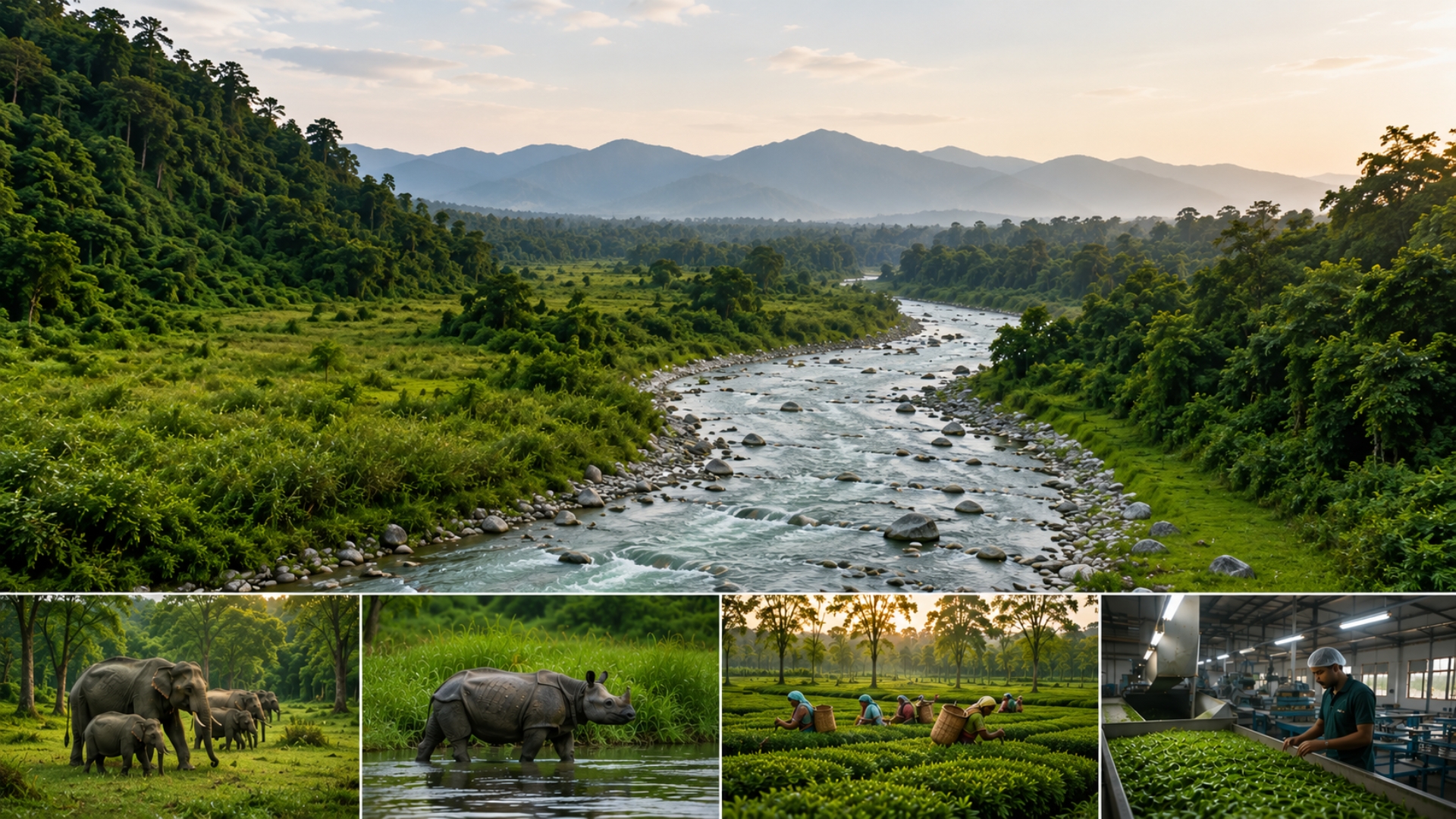
Dooars is a region in North Bengal known for its tea gardens, protected forests, wildlife, rivers and Himalayan foothills. It is home to some of the most important wildlife destinations of West Bengal, including Gorumara National Park, Jaldapara National Park and Buxa Tiger Reserve. Beyond the forests, travellers can explore working tea estates, scenic villages, historical sites and riverside destinations. The region also offers opportunities to learn about the local communities, their traditions and the history of tea cultivation.
Unlike a conventional hill station, Dooars covers a large geographical area with tourist attractions spread across several districts. The experience of visiting the region changes throughout the year with seasonal variations in rainfall, vegetation, river flow and tea cultivation. Choosing the right destinations, accommodation and travel season can help travellers make better use of their holiday. This Dooars travel guide covers everything from popular tourist places and seasonal activities to transport options, suggested itineraries and places to stay.
Where Is Dooars Located?
Dooars is located along the southern foothills of the Eastern Himalayas in North Bengal, West Bengal. According to the Cooch Behar District Government, Bengal Dooars extends approximately 130 kilometres from the Teesta River in the west to the Sankosh River in the east, with a breadth of around 40 kilometres. It primarily covers parts of Jalpaiguri and Alipurduar districts, along with adjoining areas of Cooch Behar and the low-lying plains of Kalimpong. The wider Dooars region extends into Assam and parts of southern Bhutan.
The name Dooars, also spelt Duars, means doors or gateways, referring to the historical passages connecting Bhutan with the Indian plains. There were traditionally 18 such gateways across the wider region, which supported trade and transportation between the mountains and the plains. The Sankosh River divides this geographical belt into Western Dooars in West Bengal and Eastern Dooars in Assam. This travel guide focuses on the Bengal Dooars region.
Geography and Landscape of Dooars
The geography of Dooars is characterised by alluvial plains, which are formed through the deposition of sediments carried by rivers. The relatively flat terrain gradually rises towards the Himalayan foothills, where forested hills and river valleys become more prominent. Tea plantations and agricultural fields occupy large areas between forests and rural settlements. Differences in terrain, soil and natural vegetation give each part of the region its own landscape.
Several rivers originating in Sikkim, Bhutan and the hills of North Bengal flow through these plains. The Teesta, Jaldhaka, Murti, Torsha, Raidak, Kaljani and Sankosh are among the major rivers of Dooars. They support agriculture, influence natural drainage and provide habitats for various wildlife species. Their water levels and surrounding landscapes change considerably between the rainy and dry seasons.
History of Dooars
Parts of the region were historically associated with the Kamata Kingdom and the Koch dynasty before several territories came under Bhutanese administration. The traditional gateways supported trade between Bhutan, Bengal and Assam, with goods such as silk, rice, cotton cloth, woollen products and rock salt being exchanged. Following the Anglo-Bhutan War of 1864–1865 and the Treaty of Sinchula, the British acquired the Duars territories in 1865. Jalpaiguri district was subsequently formed in 1869.
British administration brought significant changes to the economy and land use through the expansion of commercial tea cultivation in Dooars. Before the development of extensive plantations, several communities depended on traditional agriculture, cotton cultivation, weaving and forest resources. The growing tea industry encouraged workers from Chotanagpur and other parts of India to settle in the region. These developments contributed to the multicultural society and plantation-based economy found in Dooars today.
| Geographical and historical facts | Information |
|---|---|
| Alternative spelling | Duars |
| Meaning of the name | Doors or gateways |
| Geographical location | Eastern Himalayan foothills |
| Principal districts | Jalpaiguri and Alipurduar |
| Length of Bengal Dooars | Approximately 130 km |
| Breadth of Bengal Dooars | Approximately 40 km |
| Western boundary | Teesta River |
| Eastern boundary | Sankosh River |
| Traditional gateways | 18 across the wider region |
| British acquisition | 1865 |
| Major commercial crop | Tea |
What Is Dooars Famous For?
Dooars is famous for its tea gardens, one-horned rhinoceroses, Asian elephants, dense forests, flowing rivers and scenic foothill destinations. Its natural landscape allows travellers to combine wildlife tourism with plantation experiences and countryside holidays. The presence of historical forts, indigenous communities and nearby royal heritage sites adds cultural importance to the region. Unlike destinations centred around a single attraction, tourism in Dooars offers several different experiences across the plains and foothills.
Best Tourist Places in Dooars
The best tourist places in Dooars include Gorumara National Park, Jaldapara National Park, Buxa Tiger Reserve, Chapramari Wildlife Sanctuary, Murti, Samsing, Jayanti, Jhalong and Bindu. Some destinations are known for their wildlife, while others attract visitors through their natural scenery, historical importance or cultural heritage. These attractions are spread across different parts of North Bengal and cannot all be comfortably explored within a short holiday. Understanding what each destination offers can help travellers select places according to their interests.
National Parks, Wildlife Sanctuaries and Forests
1. Gorumara National Park
Gorumara National Park is a protected wildlife area in Jalpaiguri district, particularly known for the Indian one-horned rhinoceros. Its landscape consists of forests, grasslands and riverine habitats associated with the Murti and Jaldhaka rivers. Other wildlife found here includes Asian elephants, gaur, leopards, deer and rock pythons. Visitors can explore designated areas through authorised jungle safaris and watchtower visits.
2. Jaldapara National Park
Jaldapara National Park is a protected area covering approximately 216.51 square kilometres along the Torsha River in Alipurduar district. Originally established as a wildlife sanctuary in 1941, it received national park status in 2012. Its extensive grasslands provide important habitats for the Indian one-horned rhinoceros, Asian elephant, hog deer and other wildlife. The park is also known for birds such as the Bengal florican and hornbills.
3. Buxa Tiger Reserve
Buxa Tiger Reserve is a protected forest landscape located near the Bhutan border in Alipurduar district. It contains dense forests, river valleys and Himalayan foothills supporting a wide variety of wildlife. Recorded species include Bengal tigers, clouded leopards, Asian elephants, sloth bears, gaur and several smaller wild cats. Besides its ecological importance, Buxa offers opportunities for birdwatching, heritage sightseeing and trekking along permitted routes.
4. Chapramari Wildlife Sanctuary
Chapramari Wildlife Sanctuary is a protected forest area in Jalpaiguri district known for elephants, gaur and diverse birdlife. It forms part of the wider forest landscape surrounding Gorumara National Park. The nearby Murti River contributes to the natural surroundings and provides additional habitats for wildlife. Its location allows travellers to combine forest visits with riverside sightseeing around Chalsa and Murti.
5. Chilapata Forest
Chilapata Forest is an important wildlife corridor in Alipurduar district connecting the forest landscapes of Buxa and Jaldapara. The corridor supports the movement of animals such as elephants and rhinoceroses between different habitats. The Torsha and Bania rivers influence its soil and natural vegetation. Chilapata also contains ancient fort ruins, making it relevant to both wildlife and heritage tourism.
| Forest destination | District | Main attraction | Nearby tourist areas |
|---|---|---|---|
| Gorumara National Park | Jalpaiguri | Rhinoceroses and grasslands | Lataguri, Murti |
| Jaldapara National Park | Alipurduar | Rhinoceroses and riverine grasslands | Madarihat, Totopara |
| Buxa Tiger Reserve | Alipurduar | Biodiversity and forested hills | Jayanti, Rajabhatkhawa |
| Chapramari Wildlife Sanctuary | Jalpaiguri | Elephants, gaur and birds | Chalsa, Nagrakata |
| Chilapata Forest | Alipurduar | Wildlife corridor and historical ruins | Hasimara, Jaldapara |
Rivers and Riverside Destinations
6. Murti
Murti is a riverside tourist destination situated near the forest landscapes of Gorumara and Chapramari. The river flows through areas surrounded by forests, grasslands and villages, providing opportunities for nature observation. During the dry months, parts of its rocky riverbed become visible as the water level falls. The surrounding landscape is suitable for birdwatching, photography and relaxed sightseeing.
7. Jayanti
Jayanti is a village within the wider Buxa forest landscape, known for its rocky riverbed and surrounding hills. Its appearance changes between the monsoon, when the river carries more water, and winter, when stretches of the riverbed become exposed. The forest-covered hills provide a distinctive natural setting on the northern side of the river landscape. Jayanti is often explored alongside Rajabhatkhawa and other attractions in eastern Bengal Dooars.
8. Bhutanghat
Bhutanghat is a scenic destination along the Raidak River near the Bhutan border. Its surrounding forests, river valley and foothills provide a landscape different from the extensive tea plantations found further west. Seasonal changes in river flow influence the appearance and accessibility of the area. Bhutanghat is suitable for travellers planning a longer holiday covering the eastern parts of the region.
9. Gajoldoba
Gajoldoba, also spelt Gazoldoba, is a wetland and birdwatching destination around the Teesta Barrage reservoir. Its water bodies and surrounding Baikunthapur forest landscape provide habitats for various resident and seasonal migratory birds. Winter is particularly relevant for visitors interested in observing waterbirds. The destination offers a nature-based experience centred on wetlands rather than conventional jungle safaris.
| Riverside destination | River or water body | Main attraction |
|---|---|---|
| Murti | Murti River | Forest surroundings and riverside scenery |
| Jayanti | Jayanti River | Rocky riverbed and forested hills |
| Bhutanghat | Raidak River | River valley near Bhutan |
| Gajoldoba | Teesta Barrage reservoir | Wetlands and birdwatching |
Himalayan Foothills and Scenic Villages
10. Samsing
Samsing is a foothill destination known for its tea gardens, forested slopes and surrounding hills. The journey towards Samsing reveals the gradual change from the Dooars plains to the Himalayan foothills. Tea plantations spread across the gently rising terrain, while forests become more prominent towards the higher areas. The destination is suitable for scenic drives, nature photography and exploring nearby villages.
11. Suntalekhola
Suntalekhola is a nature destination near Samsing, surrounded by forested hills, streams and natural vegetation. Its landscape forms part of the transition between the plains of Dooars and the Eastern Himalayas. The higher terrain and forest surroundings distinguish it from the tea gardens of the lower plains. Visitors can combine Suntalekhola with Samsing and Rocky Island during a sightseeing trip.
12. Rocky Island
Rocky Island is a riverside destination near Samsing, situated along the Murti River. Large rocks, flowing water and surrounding forested hills form the main features of its landscape. The river changes considerably in appearance according to seasonal rainfall. It is particularly suitable for travellers interested in riverside photography and exploring natural surroundings.
13. Jhalong
Jhalong is a foothill settlement situated along the Jaldhaka River near the Bhutan border. The surrounding area consists of forested slopes, river valleys and villages. A journey through this part of North Bengal provides views of the changing landscape as the road moves away from the plains. Jhalong is commonly included in sightseeing trips covering the Jaldhaka valley.
14. Bindu
Bindu is a scenic destination near the India-Bhutan border, known for the Jaldhaka River and surrounding Himalayan hills. Its geographical setting offers views of the river valley and forested slopes on either side. Travellers approaching Bindu pass through several foothill landscapes and rural settlements. It can be explored together with Jhalong and Paren.
15. Paren
Paren is a hillside village associated with the Jaldhaka valley and surrounding forest landscape. It is primarily known for its rural surroundings rather than wildlife safaris or commercial tourist attractions. The area provides opportunities for short nature-based visits and photography. Its location makes it a suitable addition to a trip covering Jhalong and Bindu.
16. Chalsa
Chalsa is a settlement near the Himalayan foothills surrounded by tea gardens and forest landscapes. It serves as an important regional centre connecting several tourist destinations in Jalpaiguri district. Its surrounding plantations reflect the agricultural importance of the local tea industry. Travellers staying in or around Chalsa can explore nearby forests, rivers and foothill villages.
17. Raimatang
Raimatang is a forest-adjacent village in the eastern part of Bengal Dooars. Its surroundings include rivers, hills, forests and rural settlements. The natural landscape provides opportunities for nature observation and countryside sightseeing. Raimatang can be included in an extended trip covering the Buxa region and adjoining areas of Alipurduar district.
| Foothill destination | Main landscape | Places to combine |
|---|---|---|
| Samsing | Tea gardens and hills | Suntalekhola, Rocky Island |
| Suntalekhola | Forested hills and streams | Samsing |
| Rocky Island | Rocky river landscape | Samsing, Suntalekhola |
| Jhalong | Jaldhaka River valley | Bindu, Paren |
| Bindu | Bhutan-border hills and river valley | Jhalong |
| Paren | Rural hillside surroundings | Jhalong, Bindu |
| Chalsa | Tea gardens and forest surroundings | Murti, Chapramari |
| Raimatang | Forests, rivers and foothills | Buxa region |
Historical, Religious and Cultural Attractions
18. Buxa Fort
Buxa Fort is a historical site within the Buxa forest landscape of Alipurduar district. During British rule, it served as a detention facility associated with the imprisonment of Indian freedom fighters. According to the Cooch Behar District Government, the fort is approximately 30 kilometres from Alipurduar. Its forested hill surroundings make it a destination combining historical sightseeing with nature-based travel.
19. Nalrajar Garh
Nalrajar Garh is an ancient ruined fort situated within Chilapata Forest. Official tourism descriptions commonly associate the structure with the Gupta period, although its exact construction date remains uncertain. The remains provide a connection between the archaeological heritage and forest landscapes of Dooars. Visitors can include the site in a Chilapata sightseeing trip.
20. Totopara
Totopara is a village in Alipurduar district near the Bhutan border and the principal settlement associated with the indigenous Toto community. The community has its own language, cultural traditions and historical identity. The village is important for understanding the social and cultural diversity of North Bengal. Visitors should respect local customs, seek permission before photographing residents and avoid disturbing everyday community life.
21. Cooch Behar Palace
Cooch Behar Palace is a royal heritage site associated with the former princely state of Cooch Behar and the Koch dynasty. Its architecture and historical importance make it a notable attraction in the adjoining region. Although located outside the principal forest belt of Dooars, it is often included in extended North Bengal itineraries. The palace offers an experience focused on history and architecture rather than wildlife or plantation tourism.
22. Jalpesh Mandir
Jalpesh Mandir is an important temple dedicated to Lord Shiva in Jalpaiguri district. The temple is associated with regional religious traditions and attracts devotees from different parts of North Bengal. Its cultural importance extends beyond the main nature-based attractions of Dooars. Travellers interested in religious sightseeing can include the temple in their wider itinerary.
| Historical or cultural destination | Location | Significance |
|---|---|---|
| Buxa Fort | Buxa region | Colonial history and freedom struggle |
| Nalrajar Garh | Chilapata Forest | Ancient fort ruins |
| Totopara | Near the Bhutan border | Toto community and cultural heritage |
| Cooch Behar Palace | Cooch Behar | Royal history and architecture |
| Jalpesh Mandir | Jalpaiguri district | Religious heritage |
Other Places to Visit Near Dooars
Travellers planning a longer holiday can also explore destinations in the adjoining Himalayan and border regions. These places provide additional opportunities for sightseeing without necessarily forming part of the main Dooars plains.
- Neora Valley National Park: A Himalayan protected area in Kalimpong district known for its dense forests and biodiversity.
- Rajabhatkhawa: A forest destination and an important gateway to the Buxa region.
- Malbazar: A regional town surrounded by tea plantations.
- Jaigaon: An Indian border town with commercial and transport connections to Bhutan.
- Phuentsholing: A town in southern Bhutan situated across the international border from Jaigaon.
Things to Do in Dooars
Popular things to do in Dooars include jungle safaris, birdwatching, tea garden tours, trekking, nature walks, scenic drives and heritage sightseeing. The region offers activities for travellers with different interests, although their availability depends on the destination and season. Wildlife tourism is concentrated around protected forests, while plantation and countryside experiences are available across several tea-growing areas. Visitors can select activities based on their holiday duration rather than attempting to cover every attraction.
Jungle Safaris and Wildlife Watching
Jungle safaris in Dooars allow visitors to explore designated areas of national parks and protected forests through authorised tourism services. Gorumara and Jaldapara are among the principal destinations for observing large mammals, particularly rhinoceroses. Different protected areas offer different safari routes, watchtower visits and wildlife observation experiences. Sightings depend on animal movement, vegetation, weather and other natural conditions.
Travellers can obtain forest entry and booking information through the official West Bengal forest safari booking portal.
Birdwatching
Birdwatching in Dooars involves exploring forests, grasslands, wetlands and riverbanks that support different bird species. Forest habitats are associated with hornbills, parakeets, green pigeons and peafowl, while water bodies attract kingfishers, herons and lapwings. Seasonal migratory birds add to the variety found in suitable wetlands during winter. Gajoldoba, Chapramari, Jaldapara and Buxa are important destinations for this activity.
Tea Garden Tours and Tea Tasting
Tea garden tours introduce visitors to the cultivation and processing of tea within working plantations. Depending on the season, visitors may observe tea plucking, nursery activities, planting or pruning. Factory visits provide an opportunity to understand how harvested leaves are processed into finished tea. Tea tasting further helps visitors recognise differences in the colour, aroma, strength and flavour of brewed tea.
Trekking, Nature Walks and Scenic Drives
Trekking in Dooars is mainly associated with forested foothills and permitted trails in areas such as Buxa. Nature walks provide a slower way to explore suitable plantation and countryside surroundings. Scenic drives through Samsing, Jhalong and Bindu allow travellers to experience changes in terrain and vegetation. Activities within protected forests must follow applicable access restrictions and safety guidelines.
Heritage and Cultural Experiences
Heritage tourism allows travellers to explore the historical connections between Dooars, Bhutan, colonial administration and the tea industry. Historical forts, royal architecture and traditional tea bungalows represent different periods of regional development. Visits to local markets and cultural destinations can also provide insight into traditional crafts and everyday life. Such experiences are particularly meaningful when approached with respect for local communities and their customs.
| Activity | Suitable destinations | Main experience |
|---|---|---|
| Jungle safari | Gorumara, Jaldapara | Wildlife observation |
| Birdwatching | Gajoldoba, Chapramari, Buxa | Forest and wetland birds |
| Tea garden tours | Damdim, Nagrakata | Tea cultivation |
| Tea tasting | Tea estates and plantation accommodation | Tea characteristics |
| Scenic drives | Samsing, Jhalong, Bindu | Foothills and river valleys |
| Trekking | Permitted trails around Buxa | Forested hills |
| Heritage sightseeing | Buxa Fort, Cooch Behar Palace | Regional history |
| Riverside photography | Murti, Jayanti, Rocky Island | Seasonal river landscapes |
Tea Gardens and Tea Tourism in Dooars
The tea gardens of Dooars are extensive commercial plantations spread across the plains and Himalayan foothills of North Bengal. Important tea-growing areas include Damdim, Malbazar, Chalsa, Nagrakata, Banarhat, Binnaguri, Birpara and Kalchini. These plantations form an important part of the regional economy and agricultural landscape. Their historical development has also contributed to the growth of towns, villages and plantation communities.
History of Tea Cultivation in Dooars
Commercial tea cultivation expanded across the region during the latter part of the nineteenth century. British planters played a major role in establishing tea estates, while Indian entrepreneurs also contributed to the subsequent development of the industry. Land previously associated with forests and traditional agriculture was gradually brought under commercial cultivation. The growing plantations created a demand for labour and led to the development of new settlements around tea estates.
What Makes Dooars Tea Special?
Dooars tea is generally known for its bright, smooth and full-bodied liquor, which refers to the brewed liquid obtained from tea leaves. According to the Tea Board of India, tea from the Dooars-Terai region is generally somewhat lighter than Assam tea. Substantial rainfall, humid conditions and suitable acidic soils support tea cultivation in these areas. Differences in growing conditions and processing methods contribute to variations in the characteristics of individual teas.
Understanding Life on a Working Tea Estate
A working tea estate is an agricultural property where tea plants are cultivated, maintained and harvested for commercial production. In addition to tea bushes, an estate may contain nurseries, shade trees, drainage channels, pathways, processing facilities and residential areas. These features support different stages of tea cultivation and contribute to the appearance of plantation landscapes. The work carried out within an estate varies throughout the year according to weather, plant growth and agricultural requirements.
Tea plucking involves harvesting suitable young shoots for processing, while pruning helps manage the growth and structure of mature bushes. Skiffing is a lighter form of cutting used to manage the height or shape of the bush surface. Nurseries support the development of young plants before they are planted in the field. Drainage and soil management help maintain suitable growing conditions, particularly in areas receiving heavy rainfall.
| Tea estate activity | What it involves |
|---|---|
| Tea plucking | Harvesting suitable young tea shoots |
| Pruning | Cutting branches to manage bush growth |
| Skiffing | Managing the height and shape of the bush surface |
| Propagation | Producing new plants from seeds or cuttings |
| Nursery management | Raising and caring for young plants |
| Shade tree management | Maintaining suitable shade within plantations |
| Mulching | Covering soil to retain moisture and protect its surface |
| Drainage maintenance | Managing excess water within the estate |
| Tea processing | Converting harvested leaves into finished tea |
Best Time to Visit Dooars
October to March is generally the best time to visit Dooars for wildlife tourism, sightseeing and comfortable outdoor conditions. The region experiences a humid subtropical climate with warm summers, heavy monsoon rainfall and comparatively dry winters. According to the Tea Board of India, the combined Dooars-Terai tea-growing region receives approximately 3,500 mm of rainfall annually. Actual weather conditions vary between the plains, forests and Himalayan foothills.
The ideal travel season also depends on what visitors want to experience. Wildlife enthusiasts may prefer the cooler months, while travellers interested in observing tea cultivation can consider the active growing season. Winter offers opportunities to understand plantation maintenance, whereas the monsoon reveals changes in vegetation, rivers and water management. Each season therefore provides a different view of the natural and agricultural landscapes of the region.
Dooars in Spring and Summer (March to May)
Temperatures gradually increase from March as the region moves towards summer. Occasional pre-monsoon rainfall and thunderstorms become more common during April and May. The surrounding vegetation experiences seasonal growth, while tea gardens develop new shoots under suitable growing conditions. Foothill destinations and plantation landscapes are particularly relevant for holidays during these months.
March marks the beginning of several tea planting and propagation activities, including the preparation of cuttings and sowing of shade tree seeds. During April, estates continue planting, manage nurseries and maintain new shoot growth. May involves regular plucking, care of young plants and maintenance of the plucking surface. These activities provide opportunities to understand the early and active stages of the annual tea cultivation cycle.
Suitable experiences during spring and summer:
- Observing new tea shoots and tea plucking.
- Learning about tea planting and nursery activities.
- Visiting operational tea factories.
- Exploring foothill villages and river valleys.
- Visiting protected forests before seasonal monsoon closures.
Dooars During Monsoon (June to September)
The monsoon season brings substantial rainfall, high humidity and increased river flow to Dooars. Forests, plantations and agricultural fields become extensively green, while seasonal streams carry more water. Heavy rainfall may affect road conditions, outdoor sightseeing and access to riverside destinations. Many protected forests also observe seasonal closures, generally between mid-June and mid-September.
Tea cultivation continues during the rainy season, with regular plucking, nursery management and care of young plants forming important activities. During June, estates generally complete seasonal tea planting and continue maintaining the plucking surface. July and August require particular attention to drainage channels because excess water can accumulate in vulnerable plantation areas. September includes mulching of newly planted tea, nursery preparation and continued harvesting under suitable conditions.
Suitable experiences during the monsoon:
- Observing green plantation landscapes.
- Learning about drainage and water management in tea gardens.
- Experiencing seasonal changes in rivers and streams.
- Observing tea plucking where conditions permit.
- Enjoying nature photography from safe and accessible locations.
Dooars in Autumn (October to November)
Autumn marks the transition from the rainy season towards the cooler and drier months. Forests and tea gardens retain much of their monsoon greenery, while river levels gradually begin to decline. Improved outdoor accessibility makes this period suitable for combining wildlife tourism, plantation visits and countryside sightseeing. It also coincides with several regional festivals.
October is associated with autumn propagation of tea cuttings, nursery preparation, planting and continued plucking. Mulching is also carried out in newly planted areas to protect the soil surface. During November, estates generally complete autumn planting and may begin pruning selected mature tea bushes from the middle of the month in suitable areas. The gradual change in plantation activities reflects the approaching winter season.
Suitable experiences during autumn:
- Exploring green tea gardens following the monsoon.
- Visiting national parks and wildlife sanctuaries.
- Observing autumn planting and nursery activities.
- Learning about the beginning of seasonal pruning.
- Experiencing regional festivals and cultural attractions.
Dooars in Winter (December to February)
Winter in Dooars is generally cool and comparatively dry, with occasional morning fog or mist. Reduced rainfall makes many forests, riverside destinations and foothill areas easier to access. Suitable wetlands attract seasonal migratory birds, while exposed riverbeds become more visible during the drier months. December, January and February are particularly relevant for wildlife tourism, birdwatching and countryside holidays.
Although tea bush growth slows during winter, working plantations remain agriculturally active. December involves light and medium pruning, deep skiffing, soil sample collection and drainage maintenance. Several pruning operations continue or reach completion during January, alongside land preparation, mulching and soil rehabilitation. February includes nursery preparation, cleaning and regrading of drains, and the beginning of tea or shade tree planting where adequate moisture is available.
Winter visitors may notice that some plantation sections look different from the uniformly green tea gardens associated with the growing season. This is because selected bushes undergo pruning or skiffing as part of their agricultural management. Such work helps prepare the plants and surrounding land for subsequent growing periods. A winter visit therefore provides opportunities to understand the maintenance activities that support tea production.
Suitable experiences during winter:
- Wildlife safaris and birdwatching.
- Observing tea pruning and skiffing.
- Learning about soil preparation and estate maintenance.
- Exploring rocky riverbeds and countryside landscapes.
- Visiting historical and cultural destinations.
Month-wise Weather and Tea Garden Activities in Dooars
The weather and plantation activities in Dooars change throughout the year. The following travel calendar combines general seasonal conditions with the recommended agricultural activities carried out in working tea estates. It can help visitors select a month according to their interest in wildlife, nature or tea cultivation. Actual plantation operations depend on local weather, soil conditions and estate requirements.
| Month | General weather | Tea garden activities | Suitable travel experiences |
|---|---|---|---|
| January | Cool, dry and occasionally foggy | Pruning, skiffing, mulching and land preparation | Wildlife, birdwatching and winter plantation activities |
| February | Cool with gradual warming | Drain cleaning, nursery preparation and planting | Forest visits and estate tours |
| March | Increasing temperatures | Propagation, tea planting and plucking | Tea cultivation and foothill sightseeing |
| April | Warm with occasional rainfall | Nursery management, planting and shoot management | Factory visits and plantation photography |
| May | Warm and humid | Plucking, young plant care and nutrient management | Tea cultivation and scenic drives |
| June | Beginning of the main monsoon | Completion of planting, plucking and weed management | Green plantation landscapes |
| July | Heavy rainfall | Plucking, skiffing and drainage monitoring | Monsoon scenery where accessible |
| August | Wet and humid | Drainage maintenance, plucking and nursery care | Rain-fed landscapes and estate stays |
| September | Gradually declining monsoon | Mulching, nursery preparation and plucking | Seasonal changes and plantation visits |
| October | Decreasing rainfall | Autumn propagation, planting and harvesting | Wildlife, tea gardens and festivals |
| November | Comparatively dry and cooler | Completion of autumn planting and beginning of selected pruning | Heritage sightseeing and forest visits |
| December | Cool and relatively dry | Pruning, deep skiffing, soil testing and drainage work | Winter holidays and estate maintenance observation |
Which Season Is Best for Different Travel Experiences?
| Travel interest | Generally favourable period |
|---|---|
| First-time visit | October–March |
| Wildlife tourism | October–March |
| Birdwatching | Winter, particularly at wetlands |
| Tea plucking observation | March–November |
| Tea planting and propagation | Spring and autumn |
| Pruning observation | November–February |
| Plantation drainage activities | Winter and monsoon |
| Green monsoon landscapes | June–September |
| Riverside sightseeing | Comparatively dry months |
| Family holidays | October–March |
Local Culture, Festivals and Food of Dooars
The culture of Dooars reflects the traditions of indigenous communities, agricultural settlements and generations of tea plantation workers. Historical trade, migration and interaction between different populations have contributed to the cultural diversity of the region. Traditional crafts, languages, festivals, music and food vary considerably between communities. Travellers can experience this diversity through visits to local markets, cultural destinations and regional celebrations.
People and Languages
Communities such as the Toto, Mech, Rabha, Garo and Dukpa have longstanding historical associations with different parts of the region. The development of commercial tea plantations encouraged the settlement of Oraon, Munda, Santal and other Adivasi communities. Rajbanshi, Bengali, Nepali-speaking and other populations further contribute to the social identity of North Bengal. Bengali, Hindi, Nepali, Sadri, Santali, Kurukh, Mundari, Toto, Rajbanshi and Kamtapuri are among the languages and linguistic varieties used across different settlements.
Festivals and Traditional Arts
Festivals in Dooars reflect the religious beliefs and cultural practices of its diverse communities. Durga Puja is widely celebrated across West Bengal, while the Raas Mela in Cooch Behar holds particular regional importance. Traditional weaving and bamboo craftsmanship remain associated with the cultural heritage of North Bengal. Bhawaiya, a folk music tradition of the wider region, is another important form of cultural expression.
| Festival or tradition | Cultural significance |
|---|---|
| Durga Puja | Major religious festival |
| Cooch Behar Raas Mela | Religious and cultural fair |
| Poila Baishakh | Bengali New Year |
| Dol Yatra | Spring festival |
| Rath Yatra | Traditional religious celebration |
| Poush Parbon | Seasonal celebration |
| Bhawaiya | Regional folk music |
| Bamboo crafts and weaving | Traditional craftsmanship |
Local Food to Try in Dooars
Local food in Dooars reflects Bengali, Nepali, Adivasi and other regional cooking traditions. Rice-based preparations, savoury snacks, vegetables and different fish and meat dishes contribute to this variety. Some food items are widely available across North Bengal, while others are associated with particular communities. Locally produced tea is another important part of the food and beverage culture.
| Food item | Description |
|---|---|
| Momos | Steamed or fried dumplings |
| Chop | Fried savoury snacks |
| Bhapa pitha | Traditional steamed rice-based preparation |
| Bamboo shoot dishes | Preparations using edible bamboo shoots |
| Dry fish pickle | Pickled dried fish |
| Fish pakora | Fried fish preparation |
| Puri bhaji | Fried flatbread served with vegetables |
| Rice-based dishes | Various regional preparations |
How to Reach Dooars
Dooars can be reached by air through Bagdogra Airport, by train through several regional railway stations and by road from Siliguri and other North Bengal towns. The most suitable arrival point depends on the location of the intended tourist destination. Western and central parts of Bengal Dooars are generally accessible from Siliguri and New Jalpaiguri, while railway stations around Hasimara and Alipurduar serve the eastern areas. Most journeys involve an onward road trip to the selected accommodation.
By Air
Bagdogra Airport (IXB) is the principal air gateway for travellers visiting western and central Bengal Dooars. It provides connectivity between North Bengal and other parts of India. From the airport, visitors can continue by road towards Damdim, Malbazar, Chalsa, Nagrakata and other destinations. Cooch Behar Airport is another regional airport, although scheduled passenger flight availability may vary.
By Train
The nearest suitable railway station to Dooars depends on which part of the region a traveller intends to explore. New Jalpaiguri is a major railway gateway for visitors arriving from different Indian cities. Smaller regional stations provide closer access to several plantation areas and forest destinations. Travellers heading towards Buxa, Jaldapara or Chilapata can consider railway connections further east.
| Railway station | Suitable destinations |
|---|---|
| New Jalpaiguri (NJP) | Damdim and western Bengal Dooars |
| Siliguri Junction | Western Dooars and adjoining areas |
| New Mal Junction | Malbazar, Damdim and Chalsa |
| Hasimara | Jaldapara, Chilapata and Bhutan-border areas |
| Alipurduar Junction | Buxa, Jayanti and nearby destinations |
| New Alipurduar | Eastern Bengal Dooars |
By Road
Road networks connect Siliguri with Malbazar, Chalsa, Nagrakata, Birpara, Madarihat, Alipurduar and other regional towns. Public buses operated by the North Bengal State Transport Corporation provide connections between various towns. Private taxis and hired vehicles offer additional options for reaching forest destinations and rural accommodation. Road journeys also allow travellers to observe changes in landscape between the plains, tea gardens and foothills.
Getting Around Dooars
A private or hired vehicle is generally a convenient way to explore multiple destinations because tourist attractions are widely distributed across the region. Public transport can be useful for travelling between major towns, but reaching smaller villages and forest areas may require separate arrangements. Visitors should group nearby attractions to reduce repeated journeys across long distances. Jungle safaris and certain forest visits may require authorised vehicles rather than regular tourist cars.
How to Plan a Dooars Trip
A well-planned Dooars trip involves choosing tourist destinations according to their geographical proximity, available travel time and personal interests. The region is large enough that visiting every attraction from one location may involve considerable road travel. Dividing Bengal Dooars into western, central and eastern sightseeing areas can make holiday planning easier. These travel zones are practical groupings rather than official geographical divisions.
Choosing the Right Part of Bengal Dooars
| Travel area | Important destinations | Main experiences |
|---|---|---|
| Western Bengal Dooars | Damdim, Malbazar, Gajoldoba, Samsing, Suntalekhola | Tea gardens, wetlands and foothills |
| Central Bengal Dooars | Chalsa, Nagrakata, Gorumara, Chapramari, Murti, Jhalong, Bindu | Forests, plantations and river valleys |
| Eastern Bengal Dooars | Jaldapara, Chilapata, Buxa, Jayanti, Totopara, Bhutanghat | Wildlife, heritage and border landscapes |
| Extended North Bengal circuit | Cooch Behar Palace, Jalpesh Mandir and adjoining destinations | Royal and religious heritage |
Popular Sightseeing Circuits
Sightseeing circuits are groups of nearby attractions that can be explored together without repeatedly travelling across the region. They are particularly useful for short holidays when visitors want to experience different landscapes within a limited period.
| Sightseeing circuit | Destinations to combine |
|---|---|
| Gorumara forest circuit | Gorumara, Chapramari and Murti |
| Samsing foothill circuit | Samsing, Suntalekhola and Rocky Island |
| Jaldhaka valley circuit | Jhalong, Bindu and Paren |
| Jaldapara circuit | Jaldapara and Totopara |
| Chilapata circuit | Chilapata Forest and Nalrajar Garh |
| Buxa circuit | Rajabhatkhawa, Jayanti and Buxa Fort |
| Teesta circuit | Gajoldoba and surrounding wetlands |
How Many Days Are Enough for Dooars?
Three to five days are generally enough for a Dooars holiday focused on selected sightseeing circuits. A three-day trip can include tea garden experiences, a forest visit and nearby natural attractions. Four or five days allow additional time for exploring foothill villages and river valleys. Travellers interested in covering both western and eastern Bengal Dooars may prefer a holiday of seven days or longer.
Suggested Dooars Travel Itineraries
The following itineraries provide examples of how visitors can organise their holiday according to the number of available days. They allow time for plantation experiences, nearby sightseeing and travel between different parts of the region.
3 Days and 2 Nights Dooars Itinerary
| Day | Suggested activities |
|---|---|
| Day 1 | Arrival, accommodation and tea garden visit |
| Day 2 | Gorumara or Chapramari forest visit, followed by Murti |
| Day 3 | Tea estate experience or nearby sightseeing and departure |
4 Days and 3 Nights Dooars Itinerary
| Day | Suggested activities |
|---|---|
| Day 1 | Arrival and plantation sightseeing |
| Day 2 | Forest visit and Murti |
| Day 3 | Samsing, Suntalekhola and Rocky Island |
| Day 4 | Tea estate experience and departure |
5 Days and 4 Nights Dooars Itinerary
| Day | Suggested activities |
|---|---|
| Day 1 | Arrival and exploration of nearby plantation areas |
| Day 2 | Gorumara or Chapramari and Murti |
| Day 3 | Samsing, Suntalekhola and Rocky Island |
| Day 4 | Jhalong, Bindu and Paren |
| Day 5 | Nearby sightseeing and departure |
7 Days and 6 Nights Dooars Itinerary
| Day | Suggested activities |
|---|---|
| Day 1 | Arrival in western Bengal Dooars |
| Day 2 | Gorumara and Murti |
| Day 3 | Samsing, Suntalekhola and Rocky Island |
| Day 4 | Jhalong and Bindu |
| Day 5 | Transfer towards eastern Bengal Dooars and visit Jaldapara |
| Day 6 | Explore Chilapata or the Buxa and Jayanti area |
| Day 7 | Departure |
These itineraries can be adjusted according to forest accessibility, journey times, weather conditions and individual travel interests.
Where to Stay in Dooars
Travellers visiting Dooars can stay in tea garden resorts, heritage bungalows, forest lodges, riverside accommodation, hotels and homestays. The most suitable place to stay depends on the attractions included in the itinerary and the type of holiday being planned. Accommodation near national parks is convenient for wildlife-focused trips, while plantation stays are relevant to visitors interested in tea tourism. Choosing a suitable location can also reduce travel time between destinations.
Types of Accommodation
| Accommodation type | Suitable for |
|---|---|
| Tea garden resorts | Plantation experiences and nature holidays |
| Heritage tea bungalows | Tea estate history and traditional accommodation |
| Forest lodges | Wildlife-focused holidays |
| Riverside resorts | Rivers and countryside sightseeing |
| Homestays | Rural surroundings and local hospitality |
| Hotels | Town-based stays and general sightseeing |
| Government tourist lodges | Regional sightseeing and nature tourism |
Best Locations to Stay in Dooars
Damdim, Chalsa, Nagrakata, Lataguri and Murti are among the accommodation areas suitable for exploring western and central Bengal Dooars. Madarihat and Hasimara provide access to Jaldapara and Chilapata. Travellers planning to explore Buxa, Jayanti and other eastern destinations may find accommodation around Alipurduar more convenient. Longer holidays covering both ends of the region may benefit from staying at more than one location.
| Accommodation area | Nearby sightseeing opportunities |
|---|---|
| Damdim | Tea gardens, Malbazar and western foothill destinations |
| Nagrakata | Chapramari, Murti and Jaldhaka valley |
| Chalsa | Tea plantations and nearby forests |
| Lataguri | Gorumara National Park |
| Murti | Riverside and forest destinations |
| Madarihat | Jaldapara National Park |
| Hasimara | Chilapata and adjoining attractions |
| Alipurduar | Buxa, Jayanti and eastern destinations |
| Jayanti | Forests, river landscapes and foothills |
Tea Resorts and Heritage Bungalows in Dooars
Tea resorts in Dooars are accommodation properties situated within or alongside tea plantations, offering visitors an opportunity to experience estate landscapes. Heritage tea bungalows have historical connections with the residential buildings used by plantation management during the development of the tea industry. Some of these buildings have been adapted for tourism while retaining their association with working tea estates. Such accommodation provides a different experience from staying in hotels located within commercial towns.
Sylee Bungalow at Damdim and Nya Sylee Bungalow at Nagrakata are two examples of heritage tea estate accommodation operated by Octavius Tea Resorts. Both are located within tea-growing areas of Jalpaiguri district. Damdim provides access to attractions around the western plantation belt, while Nagrakata is situated closer to several central sightseeing circuits. Their respective geographical locations are useful considerations when selecting accommodation for a tea-focused holiday.
Essential Travel Tips for Dooars
Travelling through Dooars requires consideration of seasonal weather, geographical distances and regulations within protected forests. The region contains working agricultural estates and wildlife habitats rather than exclusively developed tourist areas. Certain destinations may have access restrictions, particularly during heavy rainfall or seasonal forest closures. Responsible travel helps visitors enjoy these landscapes while respecting the environment and local communities.
| Subject | Travel guidance |
|---|---|
| Itinerary | Group nearby attractions into individual sightseeing trips |
| Accommodation | Select a location according to the planned destinations |
| Forest visits | Follow authorised entry and safari procedures |
| Identification | Carry valid identification for applicable entry requirements |
| Wildlife safety | Maintain a safe distance from animals |
| Winter clothing | Carry warm layers for mornings and evenings |
| Rainy season | Carry suitable rain protection and allow flexibility in travel plans |
| Footwear | Use comfortable walking shoes |
| River safety | Avoid entering swollen rivers or strong currents |
| Plantation visits | Obtain permission before entering working estate areas |
| Photography | Respect local rules and personal privacy |
| Border travel | Follow applicable international border regulations |
| Environmental responsibility | Avoid littering and disturbing natural habitats |
Frequently Asked Questions About Dooars
Q1. Is Dooars a hill station or a plains region?
Answer: Dooars is primarily a region of alluvial plains and Himalayan foothills rather than a conventional hill station. However, several tourist destinations situated towards its northern areas have hilly surroundings.
Q2. Are Dooars and Darjeeling the same?
Answer: No. Dooars and Darjeeling are distinct geographical regions of North Bengal. Darjeeling is predominantly associated with mountainous landscapes, while Dooars is characterised by plains, rivers, forests and extensive foothill plantations.
Q3. What is the difference between Dooars and Duars?
Answer: There is no geographical difference between Dooars and Duars. They are alternative spellings of the same regional name.
Q4. Can tourists visit tea gardens during winter?
Answer: Yes. Winter visits provide opportunities to understand agricultural maintenance activities such as pruning, skiffing, soil preparation and drainage work. However, active tea shoot growth is generally slower during this season.
Q5. Are tea factories operational throughout the year?
Answer: Tea factory operations depend on the availability of harvested leaves and the estate's production schedule. Processing activities generally reduce during periods of slower tea bush growth, particularly in winter.
Q6. Can tourists see snowfall in Dooars?
Answer: Snowfall is not a normal feature of the Dooars plains. Travellers looking for snowy landscapes generally need to visit higher Himalayan destinations.
Q7. Is Dooars suitable for a family holiday?
Answer: Yes. Families can choose from plantation stays, nature sightseeing, wildlife safaris, birdwatching, riverside visits and historical attractions according to their interests and travel requirements.
Q8. Can Dooars be explored without a private car?
Answer: Public transport connects several major towns, so travelling without a private car is possible. However, taxis or hired vehicles may be necessary to reach smaller tourist destinations, forest areas and rural accommodation.
Q9. Can tourists combine Dooars and Bhutan in one trip?
Answer: Dooars can be combined with a Bhutan itinerary because of its geographical proximity to the international border. Jaigaon and Phuentsholing form an important border connection, subject to applicable entry requirements.
Q10. Is tiger sighting common in Buxa Tiger Reserve?
Answer: Buxa Tiger Reserve is an important tiger conservation area, but tiger sightings should not be considered a regular or guaranteed tourist experience. Visitors can also explore the reserve for its forests, birdlife, other wildlife and historical attractions.
Q11. Can Dooars be visited throughout the year?
Answer: Dooars can be visited throughout the year, although tourism experiences change with seasonal conditions. Heavy monsoon rainfall and forest closures may limit certain activities, while other experiences, particularly tea tourism, vary according to the agricultural calendar.
Conclusion
Dooars brings together wildlife, agriculture, rivers, heritage and the everyday life of communities along the Eastern Himalayan foothills. A holiday in the region can focus on a particular interest or combine several experiences across different sightseeing circuits. Selecting destinations according to their location, understanding seasonal conditions and choosing suitable accommodation can help travellers make better use of their time. Whether visiting for a short nature holiday or an extended exploration of North Bengal, the region offers opportunities to understand both its natural environment and its agricultural and cultural heritage.