
Indian Tea Regions and Their Signature Teas | Octavius Tea Resorts
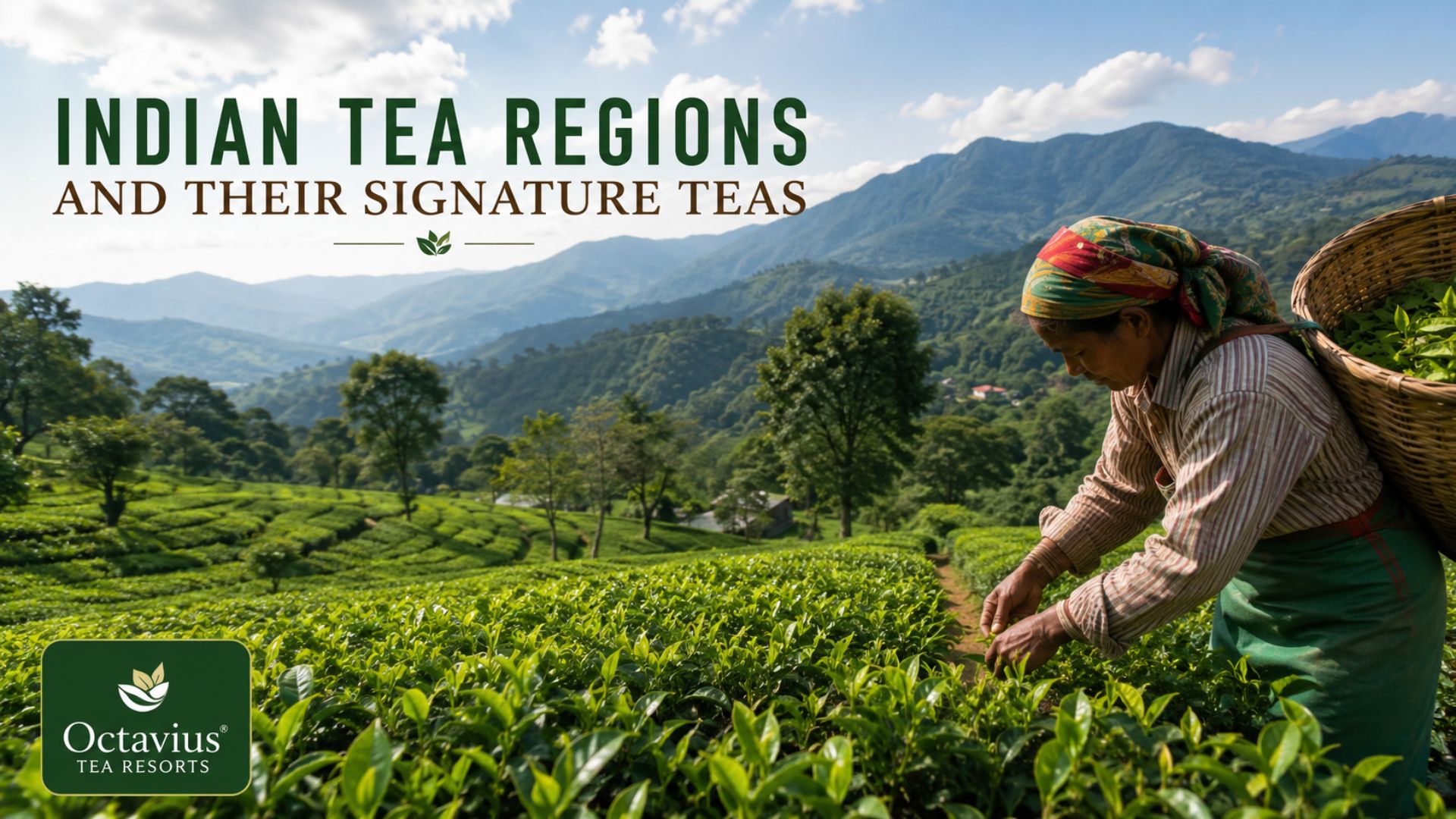
India has a long relationship with tea that goes way beyond a regular morning cup of chai. Different locations across the country have special soil, rainfall, and climate that create very specific flavours, aromas, and colours in every leaf. Tea drinkers can learn about these regional differences to understand how location shapes the final taste. The mountain areas like Darjeeling make light teas, while the flat plains of Assam produce strong and bold brews.
Octavius Tea Resorts manages tea plantations in the Dooars region of West Bengal. Our close connection with tea cultivation gives us a first-hand understanding of how local growing conditions shape the character of every cup.
Why Tea Tastes Different Across India
Most traditional teas are produced from the leaves of the same plant species, Camellia sinensis. However, the taste of the finished tea can vary considerably depending on several factors:
- Elevation of the plantation
- Local temperature and rainfall
- Soil composition and drainage
- Tea plant variety or cultivar
- Season of plucking
- Age and condition of the leaves
- Orthodox or CTC processing
- Oxidation, rolling, drying and sorting methods
- Storage and brewing conditions
The combination of these elements shows how the climate and land of a region affect local crops.
India is a popular country when it comes to tea production and brewing. Tea's flavor depends more on the place, meaning that the tea flavor varies at various regions. When it comes to geographical factors, there are several contributions to the flavors of tea. Some famous regions that produce tea are the Himalayan Region, the Brahmaputra Valley, the Dooars region of North Bengal, the Nilgiri hills as well as areas such as Kangra, Sikkim, and Tripura. It can be safely said that the place of growing tea plays a great role in determining the taste of the final drink.
1. Darjeeling: Delicate, Aromatic and Seasonally Expressive Teas
Darjeeling tea grows only in the officially recognized farming areas of the Darjeeling hills in West Bengal. The entire region sits high up in the mountains, where cold weather, thick fog, sloping grounds, and changing seasons create the right environment for farming. Natural conditions slow down how fast the plant leaves grow, which helps the leaves build a soft taste and a special smell that people everywhere recognize. You can drink this special drink to feel refreshed every day.
This special tea carries an official Geographical Indication label to protect authenticity. Tea Board India requires tea sold as Darjeeling to come from this specific area and match the expected taste and smell. Readers can trust that every cup represents genuine quality from the local region.
Signature tea: Darjeeling Orthodox Black Tea
Traditional hand-processed black tea remains the most famous product of this region. Machine-crushed variants go through heavy machine cutting, but traditional methods protect the whole shape and delicate flavor of each leaf.
Liquor prepared from this Darjeeling leaf shows colors from pale yellow to deep orange. The official tea board describes these hot drinks as gentle, smooth, light, and refreshing.
The importance of Darjeeling flushes
Darjeeling teas are strongly influenced by the plucking season.
- First flush: The first flush is harvested in spring, after the tea bushes emerge from winter dormancy. These teas are generally light, fresh and highly aromatic. The liquor is often pale, with floral, green or gently astringent notes.
- Second flush: The second flush is produced during late spring and early summer. It tends to have a deeper liquor, more body and a fuller aroma than the first flush. Premium examples are often associated with the distinctive ripe, fruity character commonly described in the tea trade as “muscatel.”
- Monsoon flush: Tea produced during the rainy season is generally stronger and less delicate than the spring and summer harvests. It is frequently used in blends and everyday tea products.
- Autumn flush: Autumnal Darjeeling teas are usually rounder and more mature in flavour, with a darker liquor and a smoother body than many first-flush teas.
How to drink Darjeeling tea
Good-quality Darjeeling tea is best enjoyed without milk. Milk can hide the delicate floral notes and light character of a first flush. Second flush and autumnal teas are a little more forgiving, but they still taste best when brewed with care.
Darjeeling is a suitable choice for drinkers who prefer:
- Delicate floral aromas
- Layered flavours
- Lighter-bodied tea
- Seasonal variation
- A clean, lingering finish
2. Assam: Strong, Malty and Full-Bodied Teas
India is a well-known producer of tea with Assam being one of the best tea-producing places in the country. Most of the tea plantations in Assam are located in the plains of the Brahmaputra valley, which is a warm and wet area. High rainfall along with rich and fertile soil help in the growth of lush tea plantations in the western part of the country. As per the Tea Board of India, tea from Assam is characterized by dark red color, strong liquor, and rich malt flavor.
Signature teas: Assam CTC and Assam Orthodox
Assam produces both CTC and orthodox teas.
Assam CTC
CTC stands for Crush, Tear and Curl. During this manufacturing process, tea leaves are passed through rollers that break them into small, uniform granules.
Assam CTC produces a strong, dark and brisk cup. It extracts quickly and combines effectively with milk, sugar and spices, which is why it is widely used in:
- Indian milk tea
- Masala chai
- Breakfast blends
- Tea bags
- Strong everyday tea blends
Its strength and colour make it especially suitable for consumers who want a bold cup that remains noticeable after milk is added.
Assam Orthodox
Tea lovers can enjoy Orthodox Assam tea because workers make it using traditional methods that keep the leaves mostly whole. Mechanical blades cut CTC tea into tiny pieces, but orthodox processing protects the natural qualities of the leaves. Water extracts deep aromas, smooth textures, and rich flavours from these intact leaves during brewing. Second-flush orthodox teas stand out especially well due to the dark golden color and distinct malt flavor. The Tea Board of India confirms the official origin of this product through the Assam Orthodox Tea Geographical Indication tag.
How Assam differs from Darjeeling
Darjeeling and Assam may be located close to each other, but their teas are easy to tell apart. Darjeeling tea is light and fragrant with floral notes, whereas Assam tea is darker, stronger, and known for its rich malty flavour.
Assam is a suitable choice for drinkers who prefer:
- Strong breakfast tea
- Deep colour
- Malty flavour
- Tea with milk
- Masala chai
- A bold and energising cup
3. Dooars-Terai: Bright, Smooth and Full-Bodied Teas
The Dooars and Terai regions are located at the foot of the Himalayas in northern West Bengal, below the Darjeeling hills. The flat topography, enriched soil, copious rainfall and the presence of mountain rivers add to the advantages of this region to cultivate tea leaves. The locations of the tea plantations mainly include the districts of Jalpaiguri and Cooch Behar which ominously lie next to wildlife sanctuaries and dense forests. According to Tea Board India, the teas of this region have a clear color, smooth texture and a decisive aroma which seems lighter than tea from Assam.
Signature tea: Dooars CTC Black Tea
The region is particularly important for strong black teas, including CTC grades used in everyday blends and milk tea.
A typical Dooars CTC can offer:
- Good colour
- Noticeable strength
- Smooth body
- Briskness without excessive sharpness
- A balanced profile suitable for blending
- Compatibility with milk and sugar
Dooars tea often occupies a useful sensory position between the intensity of Assam and the lighter style associated with some other North Indian teas. It can have sufficient body for a strong morning cup while remaining comparatively smooth and approachable.
Orthodox and speciality teas from the Dooars
Many tea gardens in this region produce standard CTC tea. However, Octavius Tea also makes special varieties like orthodox black tea, green tea, and custom blends.
The exact taste of the beverage depends on the specific farm, plant type, height of the land, picking quality, and processing methods. Good quality tea from this area can taste strong, sweet, earthy, or fruity with a fresh aftertaste.
Why the Dooars deserves greater recognition
Discussions about Indian tea regions often focus almost entirely on Darjeeling and Assam. However, the Dooars is an important tea-producing landscape in its own right.
Its tea culture is shaped by the meeting of several natural environments:
- Himalayan foothills
- High seasonal rainfall
- Fertile plains
- Mountain-fed rivers and streams
- Forest ecosystems
- Expansive tea plantations
This connection between tea cultivation and the surrounding landscape is easy to see across the Dooars. Tea plantations are part of a much larger environment that includes forests, rivers, hills, nearby villages, and wildlife corridors.
Experiencing Dooars Tea at Octavius Tea Resorts
Most people only see tea when it comes inside a packet, tin, or small bag. You can get a completely fresh view of tea when you visit a working plantation.
Octavius Tea Resorts helps you see how workers grow tea right on the land. You can find these traditional plantation stays at the Sylee and Nya Sylee properties in the Dooars area of West Bengal.
This trip brings together tea gardens, open nature, local history, and a peaceful lifestyle. You will have time to walk through rows of tea plants, enjoy the open views, join special tea activities, and learn how fresh leaves turn into the drink in a cup.
Nya Sylee Tea Estate covers around 775 hectares of land, and tea plants grow on more than 460 hectares of this area. The property features a main house built for senior managers over a hundred years ago. You can stay in this historic building today because the rooms are fully maintained for visitors.
Sylee Tea Estate spreads across an even bigger area of more than 1,000 hectares. Tea plants cover over 600 hectares of this land. You can enjoy clear views of distant mountains and endless green fields right from the balcony of another grand house built for company directors.
Depending on the selected programme and local conditions, the wider Octavius experience may include activities such as:
- Tea-garden walks
- Tea plucking experiences
- Tea tasting and tea education
- Nature walks
- Local cultural experiences
- Plantation sightseeing
- Indoor and outdoor activities
- Excursions in the wider Dooars region
Octavius Tea Resorts also highlights connectivity from Bagdogra Airport and New Jalpaiguri Railway Station, making the estates accessible as part of a North Bengal itinerary.
For us, promoting Dooars tea is not only about describing its flavour. It is also about introducing travellers to the place, people, cultivation practices and natural environment behind the cup.
4. Nilgiri: Fragrant, Bright and Brisk Southern Teas
The Nilgiri tea region covers the high hills across southern India, mainly in the state of Tamil Nadu with a few gardens in Kerala and Karnataka. Rain from two different monsoon seasons allows plants to grow for most months, so workers can collect fresh green leaves throughout the year. Tea from this region offers a nice smell, a clear yellow color, and a sharp taste that feels like fresh fruits or flowers. Federal authorities give these leaves a special mark of origin to confirm the exact location and high standard of the product.
Signature teas: Nilgiri Orthodox and fragrant black tea
Nilgiri orthodox black teas have a fresh smell, a clear color, and a soft taste. You will find that the flavor is quite different from the teas produced in Assam or Darjeeling.
The drink feels lighter and less strong when you compare Nilgiri tea with Assam tea. You can notice a brighter and clearer flavor when you compare it with Darjeeling tea. Tea makers often choose Nilgiri tea for mixing different leaves because the balanced taste adds freshness without hiding other ingredients. The Tea Board of India states that this special mix of flavor and strength helps Nilgiri tea stay popular in mixed tea blends.
Nilgiri frost tea
Some of the region’s most distinctive speciality teas are produced during colder winter conditions at higher elevations. These are commonly called frost teas.
Cool temperatures slow leaf growth and can encourage concentrated aromas. Carefully manufactured frost teas may offer floral, fruity, sweet and crisp characteristics.
Nilgiri tea for iced tea
Nilgiri tea is also well suited to iced-tea preparation. Its bright liquor and clean finish can remain refreshing when chilled, while some teas are less prone to becoming dull or overly heavy at lower temperatures.
Nilgiri is a suitable choice for drinkers who prefer:
- Fragrant black tea
- Floral and fruity notes
- A brisk, clean cup
- Lighter breakfast blends
- Cold brew or iced tea
- Tea without excessive heaviness
5. Kangra: Mellow Himalayan Teas with Fruity and Woody Notes
Kangra tea grows in Himachal Pradesh right in front of the tall Dhauladhar mountain range. British officers introduced tea plants to this region during the 1800s. Large tea companies produce most tea in famous regions like Assam, Darjeeling, and Nilgiris. This smaller mountain valley remains special because local families grow high-quality tea leaves on quiet hillside farms.
Local farmers hold a registered Geographical Indication tag to protect the tea from this valley. You can find both black tea and green tea here according to the official records of Tea Board India. Spring leaves give the drink a pleasant smell and a fruit-like flavor. People who drink the black variety notice a pleasant sweet taste after finishing a cup. The green variety gives off a mild smell that reminds readers of clean wood.
Signature teas: Kangra Orthodox Black Tea and Kangra Green Tea
Kangra black tea is generally gentler than Assam and often more substantial in body than very delicate high-grown teas.
Tea Board India describes Kangra tea as somewhat milder than Darjeeling in flavour, while offering more body and liquor.
Kangra green tea is another important regional style. Depending on its processing, it may have:
- Soft vegetal notes
- Mild woody aromas
- Gentle astringency
- A clean finish
- Subtle sweetness
Kangra is a suitable choice for drinkers looking for a less familiar Himalayan tea with moderate body and restrained aromatic complexity.
6. Sikkim: Refined Himalayan Teas from a Small Production Region
Sikkim is one of the smallest tea-growing regions in India. It is located in the Himalayas just north of West Bengal. Because it shares similar high-altitude conditions with Darjeeling, people often compare the two. Even so, Sikkim tea has developed a character of its own. Most tea lovers associate Sikkim with the famous Temi Tea Estate, the state's best-known and only major tea estate.
Signature tea: Sikkim Orthodox Black Tea
Sikkim orthodox teas are generally known for:
- Floral aroma
- Gentle sweetness
- A light-to-medium body
- Bright liquor
- A clean finish
- Seasonal variations between spring, summer and autumn harvests
Some Sikkim teas may display a fuller or slightly less delicate character than comparable Darjeeling teas, although profiles vary by season and manufacturing style.
Because Sikkim produces tea on a relatively limited scale, its teas can be harder to find in mainstream retail markets. They appeal particularly to drinkers interested in small-origin Himalayan orthodox teas.
7. Tripura: Strong CTC Teas from Northeast India
Tea has been grown in Tripura since the early 1900s. Unlike many of the older tea regions of India that developed under European planters, tea cultivation in Tripura began through the efforts of Indian entrepreneurs with support from the former princely state. Favourable rainfall, a warm climate, and fertile soil continue to make the state well suited for growing quality tea.
Signature tea: Tripura CTC
Most tea produced in Tripura is CTC black tea, while a smaller quantity of green tea is also manufactured.
Tripura CTC is commonly used for:
- Strong milk tea
- Regional blends
- Tea bags
- Masala chai
- Value-oriented everyday tea products
Its significance lies not only in a single luxury or speciality profile, but in its role as an important regional source of accessible black tea.
Orthodox Tea and CTC Tea: Understanding the Difference
The regional identity of tea is closely connected with how the leaves are processed.
Orthodox tea
Orthodox manufacturing generally involves withering, rolling, oxidation, drying and sorting while retaining more of the leaf’s original structure.
Orthodox teas may offer:
- Greater aromatic complexity
- More visible whole or broken leaves
- Seasonal distinctions
- Layered flavours
- A slower and more controlled infusion
Darjeeling, Sikkim, Kangra and premium Nilgiri teas are frequently associated with orthodox production. Assam and Dooars also produce orthodox teas.
CTC tea
CTC processing breaks the leaves into small, dense particles. These particles infuse rapidly and produce strong colour and flavour.
CTC teas are well suited to:
- Milk tea
- Masala chai
- Breakfast blends
- Tea bags
- Consumers who prefer a strong cup
Assam, Dooars and Tripura are major sources of CTC tea.
Neither method is automatically superior. They are designed for different styles of drinking. A delicate orthodox first flush and a strong CTC chai perform very different functions, and each should be judged according to its intended character.
How to Choose an Indian Tea by Taste
The easiest way to explore Indian tea is to begin with the flavour and drinking style you already enjoy.
- For a strong morning tea: Choose Assam CTC, Dooars CTC or Tripura CTC. These teas produce a darker liquor and work well with milk.
- For masala chai: Assam and Dooars teas are especially suitable because their strength can support spices, milk and sweeteners.
- For a delicate tea without milk: Choose Darjeeling first flush, Sikkim orthodox tea or a light Kangra tea.
- For a richer aromatic tea: Try a Darjeeling second flush or premium Assam orthodox tea.
- For a bright and fragrant cup: Choose Nilgiri orthodox tea.
- For iced tea: Nilgiri is a dependable option because of its brightness and clean flavour. Selected Dooars and Assam orthodox teas may also work well, depending on the desired strength.
- For a distinctive but less common Indian origin: Explore Kangra, Sikkim or speciality orthodox teas from the Dooars.
Brewing Regional Indian Teas Correctly
Even an excellent tea can taste flat, bitter or unbalanced when brewed incorrectly.
Delicate orthodox teas
For Darjeeling first flush, Sikkim and lighter Kangra teas:
- Use fresh water below a full rolling boil
- Steep for approximately two to four minutes
- Avoid over-brewing
- Taste without milk before adding anything
- Full-bodied orthodox black teas
For Assam orthodox, Darjeeling second flush, Dooars orthodox and Nilgiri black tea:
- Use freshly boiled water
- Steep for approximately three to five minutes
- Adjust leaf quantity before extending the brewing time excessively
- Drink plain or with a small amount of milk, depending on the tea
CTC teas
For Assam, Dooars or Tripura CTC:
- Use a smaller quantity than you might use for large orthodox leaves
- Brew briefly because the particles extract quickly
- Add milk and sugar according to preference
- For masala chai, simmering methods can be used carefully to integrate spices and milk
Brewing recommendations should be adjusted according to leaf grade, water quality and personal preference.
The Dooars: Where Tea Can Be Tasted as a Place
Every Indian tea region tells a different story. Darjeeling shows high mountain peaks, foggy weather and gentle seasonal flavors. Assam shows warm days, heavy rain and flat river land through strong flavor. Nilgiri offers clear taste and sweet smells from southern mountain ranges. Kangra and Sikkim show small mountain tea traditions, while Tripura helps greatly in making everyday tea for Indian homes.
The Dooars area feels special because green farms sit right next to tall mountains, wild forests and wide rivers. The tea here has a bright color and smooth taste, but people understand the land best by seeing the whole place instead of just drinking the tea.
Octavius Tea Resorts is there to share this real experience with visitors. We invite tea lovers to leave packaged boxes behind and step into the real environment where plants grow. You can walk through tea plants, see local garden life, learn how leaves become tea and live inside historic property buildings.
A single cup can introduce a location. Your stay in these gardens will show the entire story.
Conclusion
Exploring the different tea-growing areas and signature drinks shows how local climate shapes every taste. No single flavor can describe every cup from this country. Indian tea gardens make light spring drinks, strong breakfast tea, smooth machine-processed leaves, fragrant mountain tea, earthy green tea, and many special custom blends.
Understanding these local differences will help you choose products with better care. You will also build a strong respect for the land, farm laborers, nature, and factory skills that make every warm drink possible.
The Dooars area gives you an amazing chance to experience this connection directly. Octavius Tea Resorts owns heritage bungalows inside working tea fields, giving visitors a chance to see the region as a real farming location where every cup starts from the dirt, weather, fresh plants, and local people.