
Damdim Dooars: Tea Gardens, Nearby Places & Holiday Planning
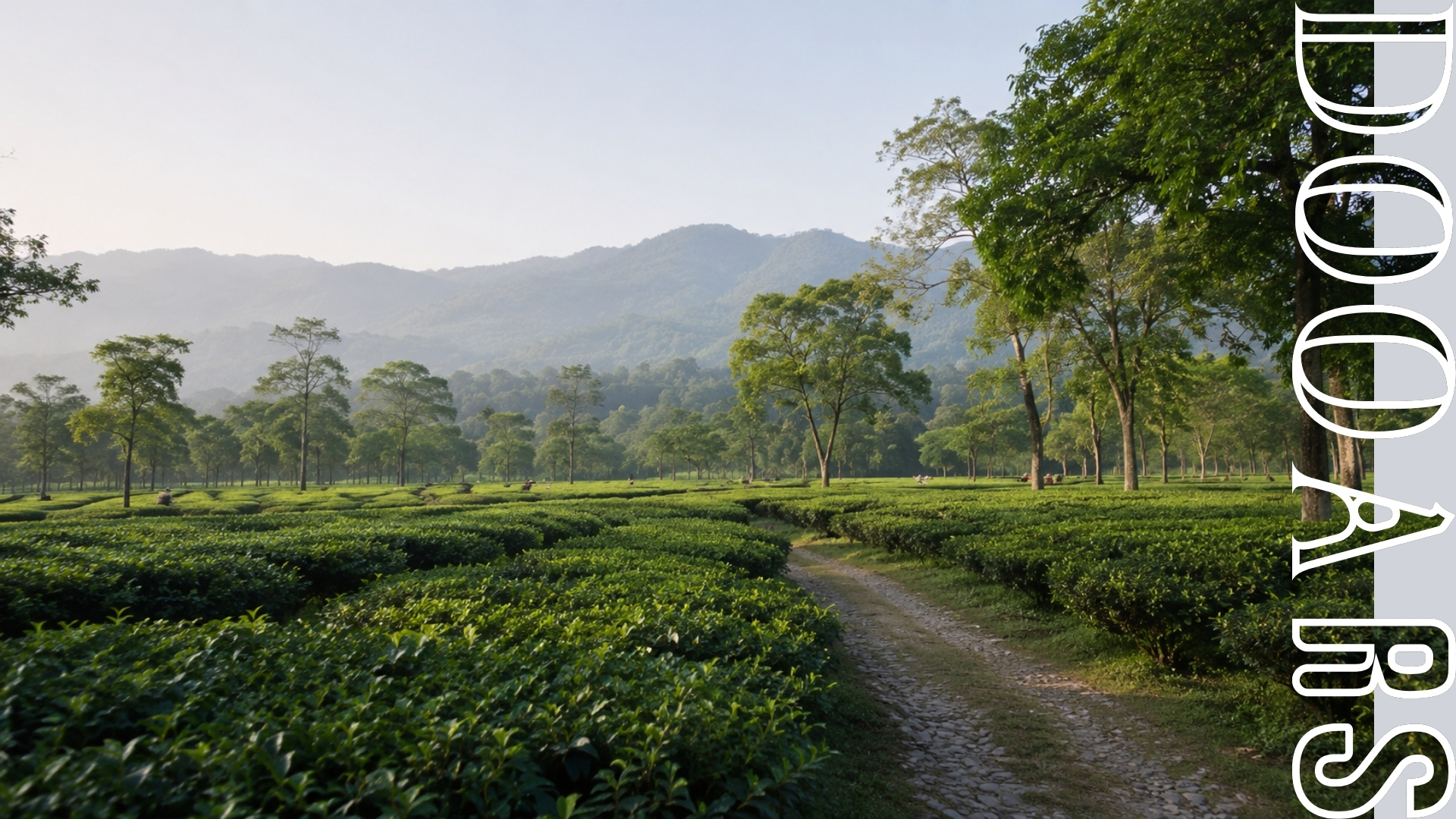
Damdim is a tea-growing village in the Malbazar subdivision of Jalpaiguri district, West Bengal. It is located in the western part of the Dooars region, where tea estates, forests, rivers and the lower Himalayan foothills are found within a relatively compact area. Large working tea estates form a major part of the local landscape, together with plantation roads, tea bushes, shade trees, factory buildings and estate settlements.
For travellers, Damdim is useful because several well-known places in western Dooars can be combined from one base. Gorumara National Park, Chapramari Wildlife Sanctuary, Murti, Lataguri, Gorubathan and Samsing are among the practical additions to a Damdim itinerary, while longer plans can include Bindu, Jhalong and Suntalekhola. For most travellers, a stay of 2 to 4 nights provides enough time for tea-estate surroundings along with selected forest, river or foothill outings.
Damdim is approximately 55 km from Bagdogra Airport and around 50 km from New Jalpaiguri Railway Station, according to West Bengal Tourism. Road travel from either gateway generally takes about 2 hours. Actual travel time can change depending on traffic, weather, road conditions and the final destination within the area.
Damdim at a Glance
| Quick Travel Information | |
| Location | Malbazar subdivision, Jalpaiguri district |
| Region | Dooars, West Bengal |
| Known for | Tea gardens and plantation landscapes |
| Landscape | Tea estates, forests, rivers and Himalayan foothills |
| Nearby places | Gorumara, Chapramari, Murti, Lataguri, Gorubathan and Samsing |
| Longer excursions | Jhalong, Bindu and Suntalekhola |
| Suggested stay | 2 to 4 nights |
| Bagdogra | About 55 km | Around 2 hours by road |
| NJP | About 50 km | Around 2 hours by road |
| Suitable for | Tea lovers, families, couples, photographers and wildlife travellers |
These distances refer to Damdim as a locality. Travel time to a particular bungalow, tea estate or sightseeing point may vary depending on traffic, weather and road conditions. Property-specific travel time can also differ slightly from the general figures shown above.
Where Is Damdim in Dooars?
Damdim falls under the Malbazar subdivision of Jalpaiguri district in the northern region of West Bengal. It lies in the western part of the Dooars tourism belt, with Malbazar serving as one of the main regional reference points. Travellers moving through this area commonly use Malbazar while travelling towards Gorumara, Chapramari, Murti, Gorubathan, Jhalong, Bindu, Samsing and Suntalekhola.
The location is important because several types of terrain meet around the Malbazar-Damdim area. Tea estates occupy large sections of the plains, protected forests lie towards Gorumara and Chapramari, and rivers such as the Murti River form another part of the regional landscape. The terrain gradually begins rising towards Gorubathan and Kalimpong district, which means Damdim connects tea country, forest areas, rivers and lower Himalayan foothills within the same wider region.
Why Consider Damdim for a Dooars Holiday?
The main identity of Damdim comes from tea cultivation. Tea estates are not isolated sightseeing points here because they form a large part of the surrounding agricultural landscape and influence the roads, settlements and local economy. At the same time, Damdim's position in western Dooars allows travellers to combine plantation surroundings with forests, rivers and foothill drives without changing accommodation every night.
A Damdim itinerary can include tea-estate landscapes, authorised tea-related activities, Gorumara National Park, Chapramari Wildlife Sanctuary, the Murti River, Lataguri, Gorubathan and Samsing. Travellers with more time can extend the route towards Jhalong and Bindu. This makes the area practical for people who want 2 or 3 different types of experiences during the same trip instead of concentrating only on wildlife or conventional sightseeing.
Tea Gardens Around Damdim
Tea estates are one of the strongest geographical features around Damdim. These are active agricultural and production areas where tea is grown, plucked and processed, rather than public gardens created only for visitors. A working estate can include cultivated tea sections, shade trees, plantation roads, worker areas, estate offices, bungalow buildings, leaf collection points and factory infrastructure.
- cultivated tea sections
- shade trees
- plantation roads
- worker areas
- estate offices
- bungalow buildings
- collection points
- factory infrastructure
Visitors should remember that a tea estate is private working property. Entry, photography, tea-garden walks and factory visits depend on the rules of the individual estate, while production activity depends on season, weather, leaf availability and factory schedules. An organised estate visit therefore provides more context than simply stopping beside a tea garden for photographs, because it can explain how cultivation and processing function together.
Travellers who want to understand the subject in more detail can read about our tea experience in Dooars. That page covers plantation activity, tea processing and related estate experiences separately. Keeping those details on the dedicated page also avoids repeating the same information throughout this article.
What Can You Experience Around Damdim?
Damdim works best when tea is treated as one part of the wider western Dooars landscape. A single trip can combine plantations, protected forests, rivers and lower Himalayan roads, giving each day a different geographical focus. The following experiences are among the most practical options around the region.
(i) Tea and Plantation Landscapes
A tea-estate visit can help you understand the journey from a growing leaf to processed tea. Depending on estate permission and current operations, an organised activity may include plantation time, information about tea plucking, a factory visit or tea tasting. Tea factories do not operate according to fixed tourist schedules throughout the year because production depends on the tea season, harvested leaf and estate operations, so factory access should always be confirmed in advance.
(ii) Gorumara National Park
Gorumara National Park is one of the major protected areas in Jalpaiguri district and one of the better-known wildlife locations in Dooars. The wider Gorumara landscape is associated with the Indian one-horned rhinoceros, Asian elephant, gaur and several bird species, while Lataguri functions as one of the main tourism access areas. Safari timings, permitted routes, entry procedures and seasonal restrictions are controlled by the relevant authorities, so travellers should check current information before fixing plans around a particular safari slot.
More information about this part of a Dooars trip is available on our jungle safari experience page. It covers the wildlife side separately from tea-estate activities. This helps travellers compare both experiences before deciding how to divide their days.
(iii) Chapramari Wildlife Sanctuary
Chapramari Wildlife Sanctuary adds another protected forest landscape to the western Dooars circuit. The sanctuary lies within the wider area around Gorumara and Murti and is associated with elephants, gaur and birdlife. Because Chapramari, Gorumara and Murti belong to the same broad tourism belt, they make more geographical sense together than attractions located much farther apart, although forest entry remains subject to official rules and seasonal conditions.
(iv) Murti River
The Murti River is an important landscape feature of this section of Dooars. The river area can be combined with forest-oriented sightseeing depending on route, available time and current conditions, giving travellers a change from tea gardens and forest interiors. For a mixed itinerary, the Murti side works particularly well as the river component of a trip combining plantations, forest areas and open landscapes.
(v) Gorubathan
Gorubathan lies towards the foothill side and falls within Kalimpong district. As the road moves towards Gorubathan, the flatter Dooars terrain gradually begins changing towards lower Himalayan slopes while tea-growing areas continue through parts of the route. This makes Gorubathan useful for travellers who want a foothill drive without completely leaving the tea-growing character of the region.
(vi) Samsing
Samsing is another practical option for travellers interested in tea gardens, slopes and forested scenery. The landscape is noticeably different from the flatter areas around Malbazar and Damdim, with wooded slopes and rising terrain creating a stronger foothill character. Samsing is therefore better planned as part of a dedicated sightseeing day instead of being added as a quick stop to an already crowded route.
(vii) Photography
The wider Damdim region provides several different subjects for photography, including tea rows, shade trees, plantation roads, estate buildings, forest edges, rivers and lower Himalayan foothills. Morning and late-afternoon light generally provide better conditions for outdoor landscape photography than stronger midday light. Photography inside factories, worker areas and private tea estates should always follow estate rules, and visitors should avoid entering working plantation sections without permission.
Places to Combine With a Damdim Holiday
A practical Dooars itinerary should be based on distance and geography rather than simply on the number of names that can be added to a sightseeing list. Damdim is most useful for western Dooars locations because several important places are connected through the broader Malbazar region. The following combinations are among the more logical options for travellers staying around Damdim.
(i) Gorumara and Lataguri
Gorumara is one of the easiest major wildlife additions to a Damdim itinerary, while Lataguri serves as an important tourism access area for the national park. A traveller staying around Damdim can keep one day mainly for forest-related activity while reserving another part of the trip for tea estates. This creates a practical tea-and-wildlife combination without requiring a change of accommodation.
(ii) Chapramari and Murti
Chapramari and Murti can be considered together because both belong to the same wider forest and river landscape. A day covering this side of western Dooars gives travellers a clear contrast with the tea-growing surroundings around Damdim. The plan should still remain flexible because rainfall, forest regulations and local road conditions can affect timings.
(iii) Gorubathan
Gorubathan provides a change from both forest and tea-estate sightseeing. It brings travellers closer to the lower Himalayan terrain of Kalimpong district while still passing through tea-growing areas on parts of the route. This makes it a useful alternative for travellers who do not want every sightseeing day to revolve around wildlife.
(iv) Samsing
Samsing is suitable for a landscape-focused outing because the area combines tea plantations, forested terrain and foothill views. It can be paired with nearby locations depending on vehicle route, road conditions and available daylight. Trying to combine Samsing with several distant Dooars attractions on the same day can result in unnecessary driving and less time at each location.
(v) Bindu
Bindu lies beside the Jaldhaka River near the India-Bhutan border area. Because it requires a longer road journey compared with places closer to the Malbazar region, Bindu is more suitable for travellers who have enough time for a longer western Dooars excursion. Weather, road conditions and departure time should be considered before adding it to a day plan.
Travellers comparing different routes can read more about sightseeing around Dooars before deciding how many locations to include. That page provides a broader look at sightseeing options beyond Damdim. It can also help separate nearby outings from routes that require more driving time.
A Practical Way to Plan Your Days in Damdim
Staying in one location for 2, 3 or 4 nights can reduce the need to repeatedly pack luggage and change accommodation. One morning can be used for plantation surroundings and a tea-related activity, while the afternoon can be kept for a shorter local outing. A separate day can then be reserved for a larger excursion towards Gorumara, Chapramari, Murti, Gorubathan or Samsing.
This approach separates longer road journeys from tea-estate time and gives the itinerary some flexibility if weather, forest schedules or road conditions change. It also prevents every day from becoming a full-day drive across different parts of Dooars. Travellers can therefore see several landscapes while still spending meaningful time in the area where they are staying.
Where to Stay Around Damdim
Accommodation is available in Malbazar and other parts of western Dooars, but the right choice depends on what you want from the trip. Travellers mainly interested in conventional sightseeing can consider hotels across the wider Malbazar region, while people specifically interested in plantation surroundings may prefer accommodation inside or close to a working tea estate. Staying within the tea-growing landscape also reduces the need to treat the tea garden as a separate sightseeing stop.
Travellers looking for this type of accommodation can consider Sylee Bungalow in Damdim. Sylee Bungalow is located within Sylee Tea Estate in Damdim, Jalpaiguri district, which places guests directly within the plantation environment. Current room details, occupancy, tariffs and enquiry information are available on the dedicated property page, while tea-estate and factory activities remain subject to estate operations and applicable stay inclusions.
How Many Days Are Enough for Damdim?
For most travellers, 2 to 4 nights is a practical range for Damdim. The right duration depends on how much importance you give to the tea estate itself compared with forests, rivers and foothill outings. Shorter trips can cover the main surroundings, while an additional night provides more flexibility for separate sightseeing days.
(a) 2 Nights and 3 Days
A 2-night, 3-day trip works when the main priorities are the tea-estate environment and one major nearby outing. Day 1 will usually include arrival, check-in and some local time, while Day 2 can be used for a larger sightseeing plan. Day 3 normally includes breakfast, some free time depending on departure schedule and the journey back towards NJP or Bagdogra, so this duration does not leave much room for several full-day excursions.
(b) 3 Nights and 4 Days
A 3-night, 4-day stay gives travellers more flexibility to separate activities instead of compressing them into the same day. One day can focus on the tea estate, another on wildlife or forests, and another on a river or foothill route. This duration also makes arrival and departure days easier to manage because the main sightseeing does not have to depend on travel-day timings.
(c) More Than 4 Days
A stay of more than 4 days makes more sense when Damdim forms one section of a wider Dooars trip. Travellers can spend the first part of the holiday in western Dooars before continuing towards other parts of Jalpaiguri or farther east. This allows Damdim to function as a regional base rather than trying to use it for every part of a long Dooars itinerary.
How to Reach Damdim
The 2 main long-distance gateways for Damdim are Bagdogra Airport and New Jalpaiguri Railway Station. Both connect the area with major cities and are commonly used by travellers entering western Dooars. From either gateway, the final section of the journey is completed by road towards the Malbazar-Damdim side.
(a) From Bagdogra Airport
West Bengal Tourism places Damdim approximately 55 km from Bagdogra Airport. Road travel generally takes around 2 hours under normal conditions. Traffic, weather and the final destination within Damdim can change the actual journey time, so travellers should keep some flexibility in arrival-day plans.
(b) From New Jalpaiguri Railway Station
Damdim is approximately 50 km from New Jalpaiguri Railway Station according to West Bengal Tourism. The road journey is again roughly 2 hours under normal conditions. Travellers arriving by train should also account for station exit time, luggage collection and road traffic before planning activities on the same day.
(c) From Siliguri
Travellers starting from Siliguri generally proceed towards the Malbazar side of Dooars before reaching Damdim. Actual driving time depends on the starting point in Siliguri, traffic and the final tea estate or accommodation property. Anyone travelling specifically to an Octavius property can check our Getting There information for property-specific travel details.
Best Time to Visit Damdim
There is no single month that works equally well for every traveller visiting Damdim. Conditions change across post-monsoon, winter, summer and monsoon periods, affecting plantation appearance, temperatures, forest access and road conditions. Your preferred season should therefore depend on whether your priority is tea-estate scenery, outdoor sightseeing, wildlife activity or a quieter monsoon landscape.
(i) Post-Monsoon and Autumn
The post-monsoon period brings strong greenery to tea gardens, forests and surrounding landscapes. October is also an important travel month in West Bengal because of Durga Puja and the autumn holiday period. Travellers planning an October visit should still check rainfall and local weather close to the travel date because seasonal conditions can vary from year to year.
(ii) Winter
Winter is one of the commonly preferred periods for outdoor travel in Dooars. Cooler conditions make longer periods outdoors more comfortable, particularly for travellers combining Damdim with Gorumara, Chapramari, Murti or foothill sightseeing. Wildlife-oriented travellers also commonly plan their Dooars trips during this period because forest-based activities form an important part of many winter itineraries.
(iii) Summer
Summer brings warmer daytime conditions, while tea estates continue functioning as working agricultural landscapes. Travellers interested in plantation activity may still find the season useful, but outdoor plans need to account for stronger midday heat. Morning activities and shorter afternoon programmes can make the schedule more comfortable during warmer periods.
(iv) Monsoon
Monsoon changes the appearance of Dooars considerably, with tea gardens and forests becoming intensely green and rivers carrying more water. Heavy rainfall can also affect roads, outdoor activities and travel timings, while protected forest tourism is subject to seasonal restrictions. Closure and reopening dates should always be checked for the specific travel year rather than relying on schedules from previous seasons.
More general seasonal information is available on our Dooars climate page. The page can help travellers understand the wider regional weather pattern before choosing dates. Local forecasts should still be checked closer to departure because short-term conditions can differ from seasonal averages.
Who Is Damdim Suitable For?
Damdim suits travellers who want the surrounding landscape to form part of the holiday instead of moving constantly between individual sightseeing points. Tea estates, forests, rivers and foothill routes allow different types of travellers to use the same base in different ways. The area is particularly relevant for tea lovers, families, couples, photographers and travellers adding wildlife to a broader Dooars trip.
(i) Tea Lovers
Tea lovers can gain more context in Damdim than they would from simply purchasing or drinking tea elsewhere. Staying within or near a working tea-growing region makes it easier to understand the relationship between tea bushes, harvested leaves, factory processing and the final product. Authorised estate experiences can add further context when plantation and factory activities are available.
(ii) Families
Families can use Damdim as one base for different activities instead of changing accommodation repeatedly. Tea-estate time, a river outing and a selected forest visit can be divided across separate days. This reduces unnecessary packing and allows the itinerary to remain flexible if weather or travel timings change.
(iii) Couples
Couples who prefer fewer hotel changes and more time within one region may find a Damdim-based itinerary practical. Plantation landscapes, rivers and foothill drives provide different surroundings without requiring long intercity transfers every day. The same base can therefore support both activity-based days and quieter periods around the estate.
(iv) Photographers
Photographers can work with at least 4 main landscape types around the wider region: tea plantations, forests, rivers and Himalayan foothills. These environments change considerably between morning, afternoon and different seasons, creating more visual variety within a relatively compact area. Estate photography should still follow local access rules, especially around factories, worker areas and active plantation sections.
(v) Wildlife Travellers
Wildlife travellers can combine a tea-country stay with visits around Gorumara and Chapramari. This works particularly well for people who want wildlife to be one part of the trip rather than the complete itinerary. Damdim may be less suitable for travellers whose only aim is to cover the maximum possible number of Dooars attractions within a very short period.
Damdim as Part of a Wider Dooars Trip
Damdim can work as the western section of a longer Dooars itinerary. One route can combine Damdim, Gorumara and Murti, while another can focus on Damdim, Gorubathan and Samsing. Travellers with additional days can extend the western route towards Jhalong and Bindu before continuing to other parts of the region.
The value of Damdim is its position between several different landscapes. Within the same broader trip, travellers can experience tea plantations, protected forests, rivers and foothill roads without trying to cover every attraction in 1 or 2 days. This makes it easier to build a route around geographical clusters instead of spending a large part of the holiday moving between distant sightseeing points.
- tea plantations
- protected forests
- rivers
- foothill roads
Frequently Asked Questions About Damdim
Q 1. Where is Damdim?
Damdim is located in the Malbazar subdivision of Jalpaiguri district, West Bengal. It forms part of the western Dooars region and lies within a landscape dominated by tea estates, forests and foothill routes. Malbazar is one of the main nearby regional reference points for travellers.
Q 2. What is Damdim famous for?
Damdim is mainly known for its tea estates and tea-growing landscape. Working plantations form a major part of the surrounding area, while forests, rivers and lower Himalayan foothills are also accessible within the wider western Dooars region. This combination gives Damdim a different character from locations centred only around wildlife or conventional sightseeing.
Q 3. Is Damdim part of Dooars?
Yes, Damdim forms part of the Dooars region of West Bengal. It lies in the western section of the tourism belt within Jalpaiguri district. The area shares the broader tea, forest, river and foothill geography associated with this part of Dooars.
Q 4. Which district is Damdim in?
Damdim falls within Jalpaiguri district and the Malbazar subdivision. Jalpaiguri district contains several well-known tea-growing and forest areas of western Dooars. The location also places Damdim within reach of neighbouring foothill routes towards Kalimpong district.
Q 5. How far is Damdim from Bagdogra Airport?
West Bengal Tourism places Damdim approximately 55 km from Bagdogra Airport. Road travel generally takes around 2 hours under normal conditions. Actual travel time can change according to traffic, weather, road conditions and the exact property or estate being visited.
Q 6. How far is Damdim from New Jalpaiguri Railway Station?
Damdim is approximately 50 km from New Jalpaiguri Railway Station. Road travel is commonly around 2 hours, although actual journey time may vary. Travellers should keep some flexibility on arrival and departure days instead of planning tightly timed sightseeing immediately after reaching the station.
Q 7. What can you do around Damdim?
Travellers can spend time around tea-estate landscapes and plan outings towards Gorumara, Chapramari, Murti, Lataguri, Gorubathan and Samsing. Longer itineraries can also include Jhalong and Bindu. Tea-estate entry, factory visits, forest access and wildlife activities should always be confirmed according to current rules and operating conditions.
Q 8. Which places can be visited from Damdim?
Practical options include Gorumara National Park, Chapramari Wildlife Sanctuary, Murti, Lataguri, Gorubathan and Samsing. Travellers with more time can consider Bindu, Jhalong and other western Dooars locations. The final route should be planned according to available days, road conditions and the amount of driving you are comfortable with.
Q 9. How many days are enough for Damdim?
Around 2 to 4 nights works for many travellers visiting Damdim. A 2-night, 3-day itinerary allows tea-estate time plus one major nearby excursion, while a 3-night, 4-day itinerary gives more flexibility for plantations, wildlife, rivers and foothill sightseeing. Additional nights are more useful when Damdim forms part of a wider Dooars journey.
Q 10. Can you stay inside a tea estate in Damdim?
Yes, Octavius Tea Resorts operates Sylee Bungalow inside Sylee Tea Estate in Damdim. The property places guests within an active tea-estate landscape rather than requiring a separate visit to experience the plantation surroundings. Current accommodation, occupancy, tariff and enquiry information is available on the dedicated property page.
Plan Damdim According to What You Want to Experience
Damdim is useful because several important parts of western Dooars meet within the same travel region. Tea plantations form the main local landscape, while Gorumara, Chapramari, Murti, Lataguri, Gorubathan and Samsing add wildlife, river and foothill experiences. This gives travellers enough variety to build a trip around different landscapes without treating every day as a long-distance sightseeing circuit.
The practical numbers are straightforward. Damdim is roughly 50 km from New Jalpaiguri, around 55 km from Bagdogra Airport and approximately 2 hours by road from either major gateway under normal conditions. For most travellers, 2 to 4 nights provides enough time to experience the tea-growing surroundings along with selected nearby attractions.
A short trip can focus on the tea estate and one important excursion, while a longer stay gives more scope to separate plantation time, wildlife, river sightseeing and foothill routes. Damdim should therefore not be judged only by the number of tourist attractions located directly inside the village. Its main advantage is its location within a tea-growing part of Jalpaiguri district and its connection with the neighbouring forest, river and Kalimpong foothill landscapes.